 Johannesburg Travel Guide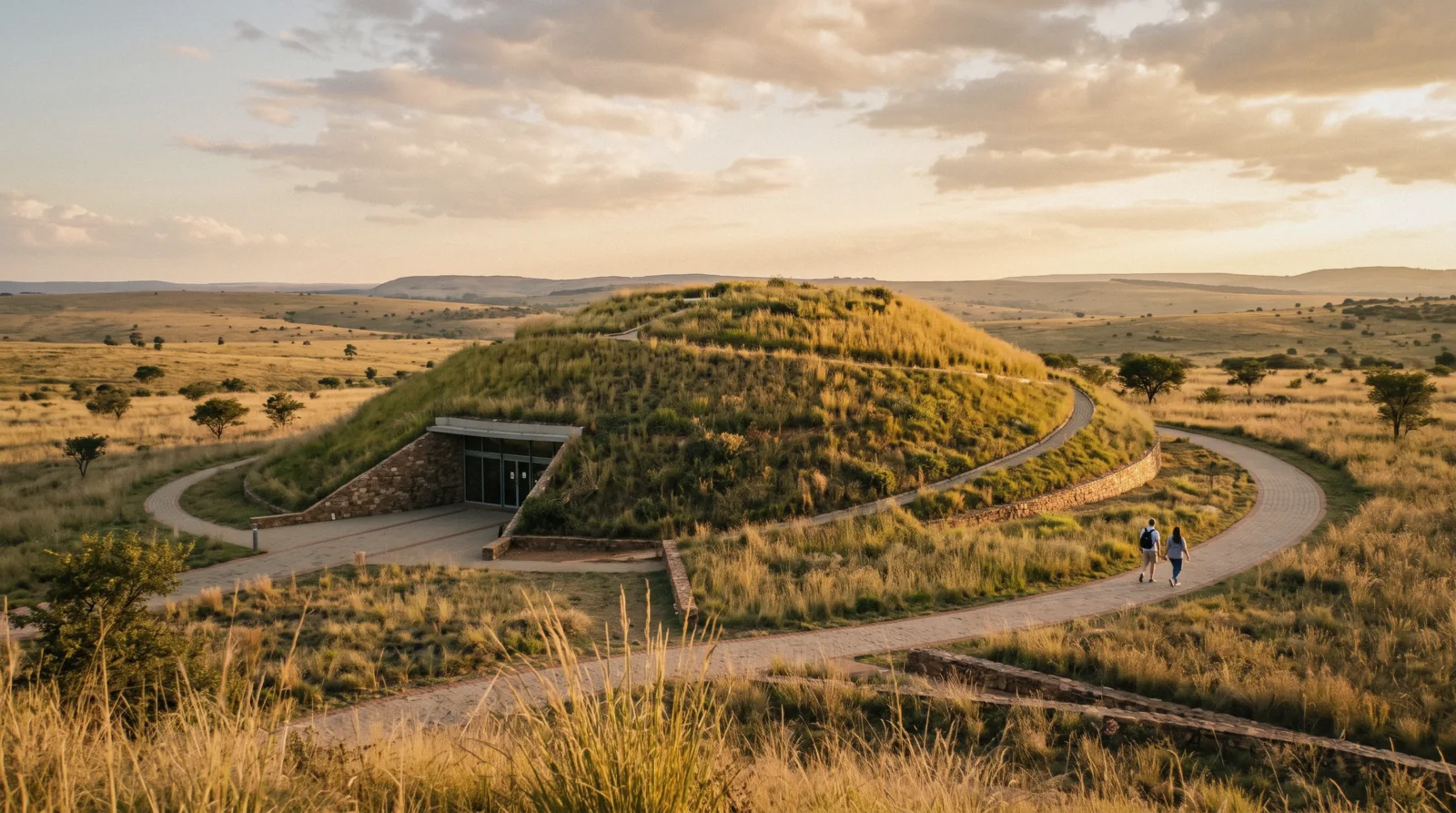
The Cradle of Humankind is the UNESCO World Heritage strip of grassland and limestone cave country about 50 km northwest of Johannesburg, and its anchor sight is the Sterkfontein Caves — closed for roughly two years of upgrades, reopened under Wits University management at $9.20 (R150) a full tour. This page covers the cave tour, the fossil discoveries that made the place famous, the Maropeng Visitor Centre and the honest holes in its published information, and how the day works by car or on a guided tour from the city. The ticket-level detail sits on the Cradle of Humankind tickets page, and the wider set of escapes is on the day trips from Johannesburg hub. The Johannesburg travel guide homepage carries the rest of the plan.
Quick answer What it is, what it costs, hours, the Maropeng catch — in three lines
The Cradle of Humankind is a UNESCO World Heritage Site about 50 km northwest of Johannesburg, and its anchor sight, the Sterkfontein Caves, reopened under Wits University management after about two years of upgrades. A full guided cave tour costs $9.20 (R150) adult, runs hourly 09:00–15:00 on Tuesday to Sunday within 09:00–16:00 opening hours, and the caves close Mondays and on 25 and 31 December. The catch: Maropeng, the visitor centre at the site's heart, publishes no current price or hours — its own website was stale and unreachable at check — so the caves are the ticket you can actually plan around.
Key takeaways
- Every official figure on this page, plus the empty Maropeng row, is argued on the Cradle of Humankind tickets page — including why no combined ticket is quoted
- For the no-car version, the guided Cradle day with hotel transfers covers Maropeng and the Sterkfontein area in about five hours from your hotel door
- The Cradle is one of three classic escapes west and north of the city — the day trips from Johannesburg hub lines it up against the Hartbeespoort Dam day and a Lion & Safari Park morning
The Cradle of Humankind in facts
Opening hours
| Sterkfontein Caves, Tue–Sun | 09:00–16:00 |
|---|---|
| Guided tours, hourly | 09:00–15:00 |
Closed Closed Mondays and on 25 and 31 December
Admission
- Adult
- $9.20 (R150) full guided tour including the exhibition
- Reduced
- $7.67 (R125) children 6–18; $6.13 (R100) pensioners with ID; $4.91 (R80) exhibition and fossil-prep lab only
- Free
- Children under 6 free, maximum two per adult; Maropeng Visitor Centre price not stated at check
Planning it
- Time needed
- One to one and a half hours for the cave tour; five to six hours for a Cradle day that adds Maropeng
- Book ahead
- Optional — walk-up usually fine
- Address
- Sterkfontein Caves, Kromdraai Road, Sterkfontein, Krugersdorp — about 40 km northwest of Johannesburg
Cradle of Humankind entry options compared
One official price grid is currently verifiable — Sterkfontein under Wits University — and one official venue, Maropeng, publishes nothing quotable at check; the tour rows are operator listings in their listed dollars. Rand figures convert dollar-first at $1 = R16.30 in Q3 2026.
| Option | Price | Includes | Cancel | Book |
|---|---|---|---|---|
| Official Sterkfontein Caves full tour — caves and exhibition, hourly 09:00–15:00The default for everyone — the only official ticket at the Cradle whose price and hours are published and current | $9.20 (R150) adult | Guided descent with helmets, the exhibition and the fossil-preparation lab view; children 6–18 $7.67 (R125), pensioners $6.13 (R100) | Bought on Webtickets or on site; no formal refund rule published — call ahead on the day in holidays | Official site |
| Maropeng Visitor Centre admission — the interactive exhibition in the burial-mound buildingNo price, hours or combined Sterkfontein ticket are stated: Maropeng's own website was stale and unreachable at check, so ring before driving out for a Maropeng-only visit — the finding in full is on the tickets page | Self-guided exhibition on the formation of the planet and human origins; tour length about two hours per the centre's former listings | Not quotable | Official site | |
| Cradle of Humankind guided day with transfers from Johannesburg, about 5 hrsThe no-car default — rated 4.77 by 146 reviewers, the cheapest way to have the whole day driven for you | $131 as listed | Guide and hotel pickup, Maropeng's museum and the Sterkfontein area in one trip | Free up to 24 hours before | Check Availability |
| Cradle of Humankind and Maropeng full-day loop, about 5 hrsSelf-drivers who would rather not — the value is the bookings handled and a guide who stays with you all day | $116.04 as listed | Driver-guide, hotel pickup and drop-off, fees and taxes listed; the unhurried version for the human-origins curious | Full refund to 24 hours before | Check Availability |
The two official rows carry plain official links — the Wits Sterkfontein page is the current selling channel and maropeng.co.za is linked exactly as found, empty price cell included. Under-6s go free at Sterkfontein (maximum two per adult) and the exhibition-plus-prep-lab-only ticket is $4.91 (R80).
Cradle of Humankind tours from Johannesburg
All five cards in the Cradle group, each linking to the operator's own page where the calendar shows live availability. Prices are the operators' listed dollars; the cave cards confirm on your date what is open.
 from $131
Johannesburg: Cradle of Humankind Guided Tour with Transfers
The Cradle of Humankind day with transfers from Johannesburg: Maropeng's museum and the Sterkfontein area in one trip.
Check Availability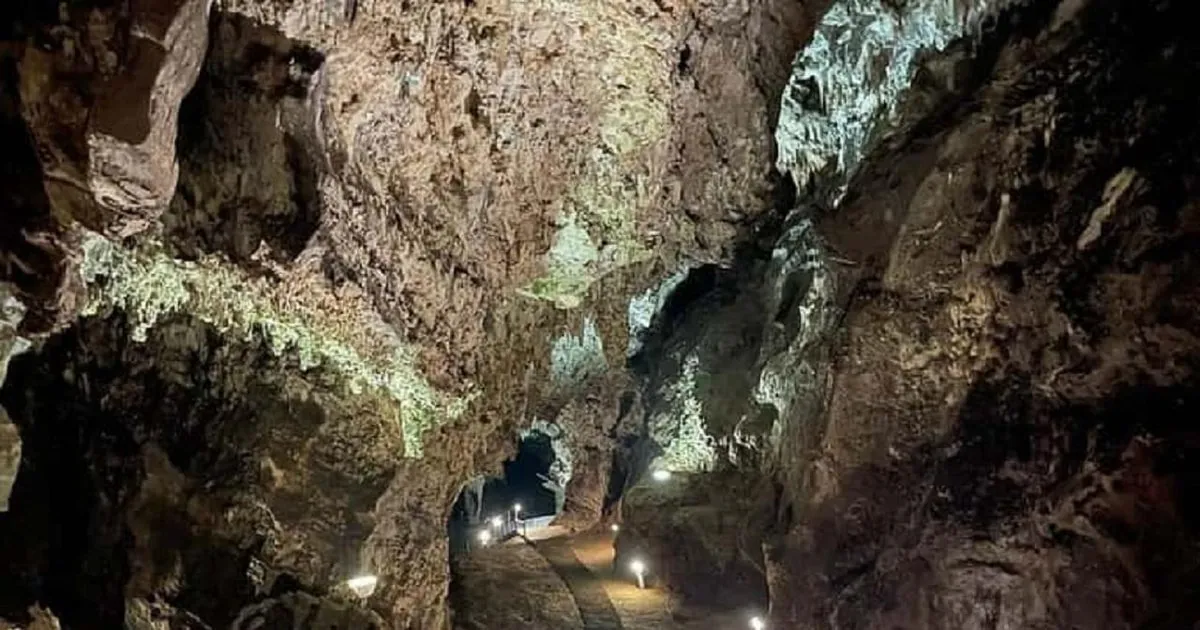 from $196
Johannesburg: Cradle of Humankind Tour with Hotel Pickup
The small-group Cradle day with hotel pickup and a longer route through the fossil sites.
Check Availability from $117.30
Sterkfontein Caves and Maropeng Museum Half Day Tour
Half day to Maropeng and the Sterkfontein Caves with the entry bookings handled.
Check Availability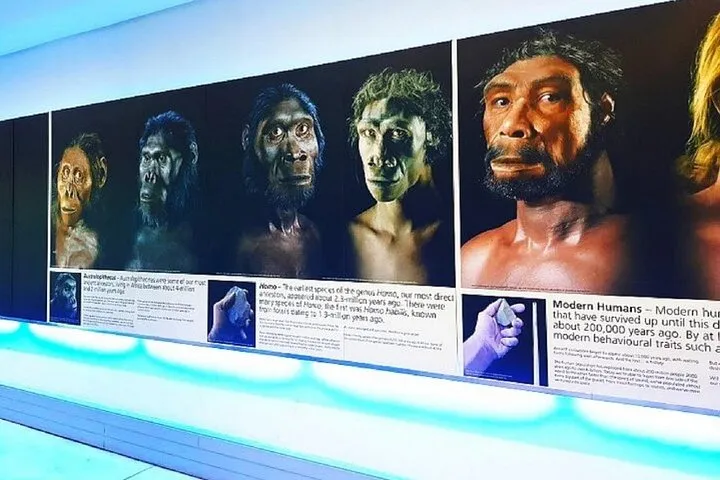 from $116.04
Cradle of humankind & Maropeng/sterkfontein caves tour
Full-day Cradle loop with Maropeng and the caves, the unhurried version for the human-origins curious.
Check Availability from $125.45
Half-Day Tour to Rhino And Lion Reserve in Krugersdorp
Half day to the Rhino and Lion Nature Reserve on the Cradle's edge, where the animals come to the waterholes.
Check AvailabilityPrices, ratings and details are the platform's own. dollar figures are the listed prices — the platform bills in your account's currency.
What the Cradle of Humankind is
A World Heritage Site since 1999, a 47,000-hectare belt of dolomite hills riddled with limestone caves, and the densest concentration of human ancestral fossils ever found — the Cradle is the reason the words human origins and Johannesburg belong in the same trip.
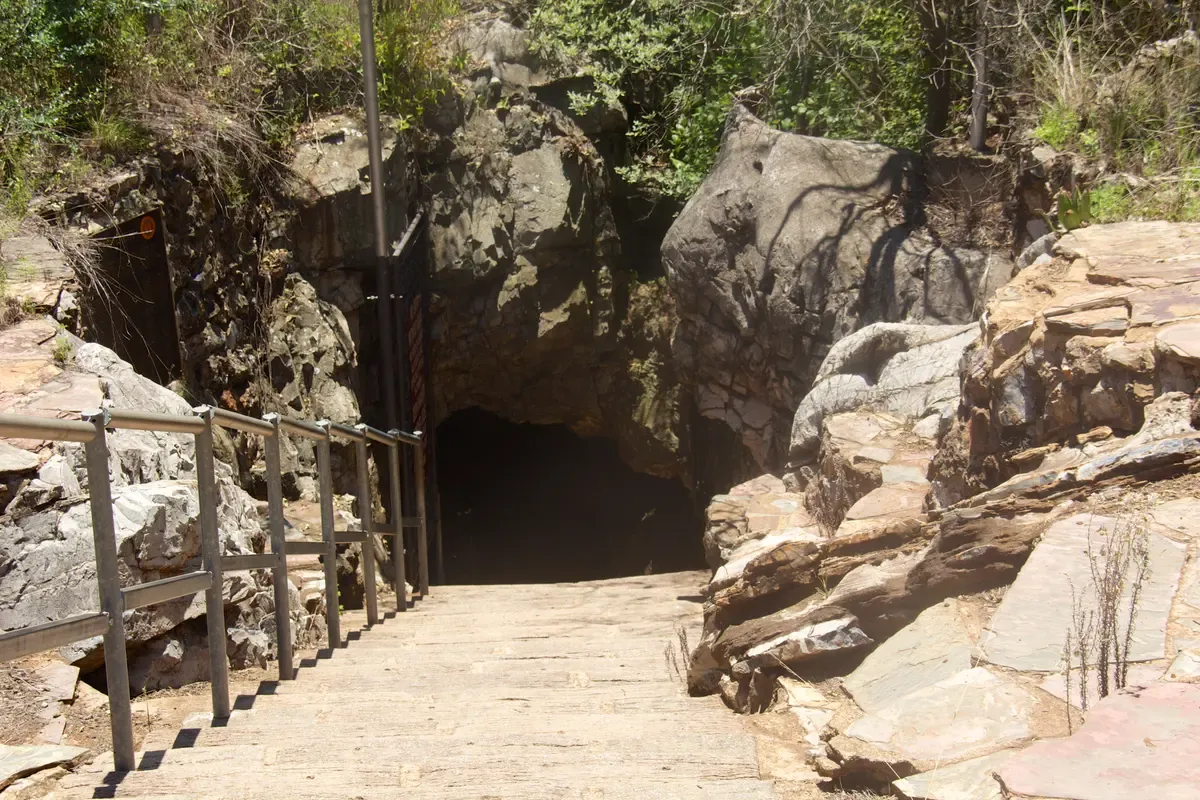
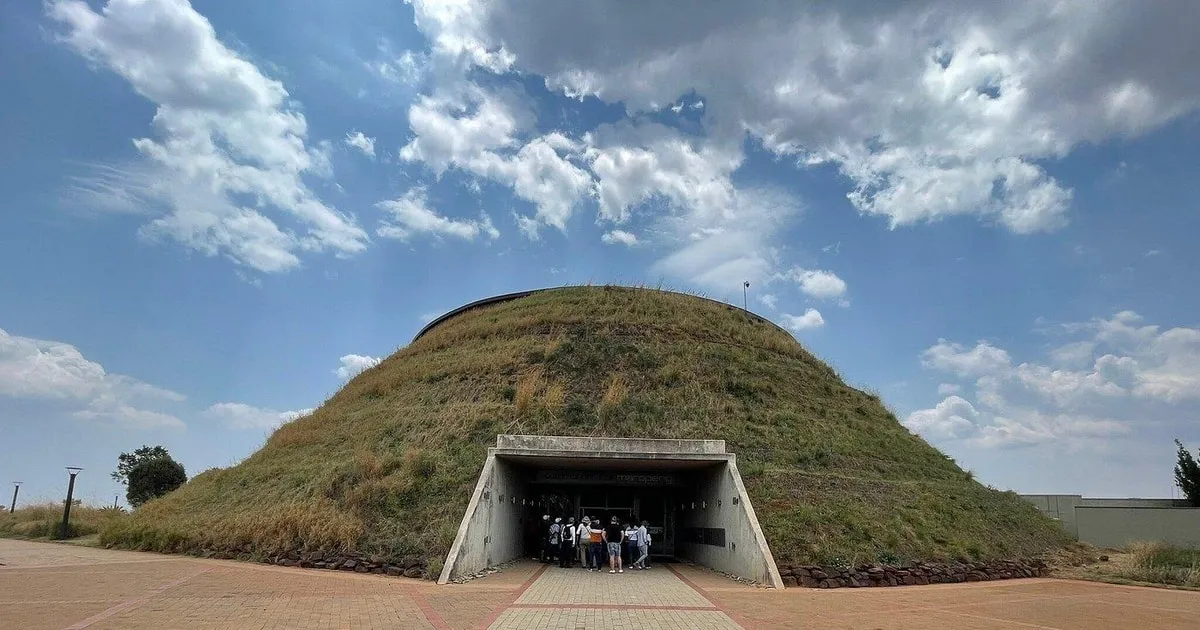
The entrance to the Sterkfontein Caves, where hourly guided tours set off into the dolomite hill. Photo: Mike Peel, CC BY-SA 4.0, via Wikimedia Commons
A World Heritage Site with 47,000 hectares of caves
UNESCO inscribed the area in 1999 under its registered name, the Fossil Hominid Sites of South Africa, and the numbers justify the label: the site currently occupies about 47,000 hectares (120,000 acres) of Gauteng grassland about 50 km northwest of Johannesburg, and holds the largest known concentration of human ancestral remains anywhere in the world. Sterkfontein alone has produced more than a third of all early hominid fossils found before 2010. The caves formed in dolomite rock over millions of years, and it is the cave systems — Sterkfontein, Swartkrans, Kromdraai, Malapa, Gladysvale, Rising Star nearby — that did the preserving: animals and hominids fell in, bones fossilised in breccia, and the miners and scientists of the twentieth century quarried them back out.
The practical point for a visitor: this is a working landscape of private farms and nature reserves with sights scattered along country roads, not a gate-and-car park. You drive between the caves, the visitor centre and the reserves — or hand the driving to a guided day — and the two anchor sites are a car ride, not a stroll, apart.
Why it is called the Cradle of Humankind
Because the sequence of discoveries here rewrote where humans come from. In 1924 Raymond Dart's Taung Child skull, found further afield but described in the same research tradition, introduced Australopithecus africanus; at Sterkfontein in 1947 Robert Broom and John T. Robinson found Mrs Ples, a 2.3-million-year-old A. africanus skull that helped confirm Africa as humanity's birthplace at a time when Asia was the serious rival. Since then the belt has produced Little Foot, Australopithecus sediba and Homo naledi — each a different branch of the family tree, several of them debated line by line in the journals to this day. UNESCO's own verdict on the listing is blunter than any brochure: the fossil evidence here proves the African continent is the undisputed Cradle of Humankind.
For the visitor the phrase has a plain meaning too: you are walking ground where the deep story is still being dug. Fossil excavations visible on the tour route have run continuously since 1966, the longest such run anywhere in the world.
Sterkfontein Caves today: the Wits years
The single most important fact about a Cradle visit is new management: after roughly two years closed for upgrades, the Sterkfontein Caves reopened under Wits University, which runs them through its own visitor site — and that page is where every current figure below comes from.
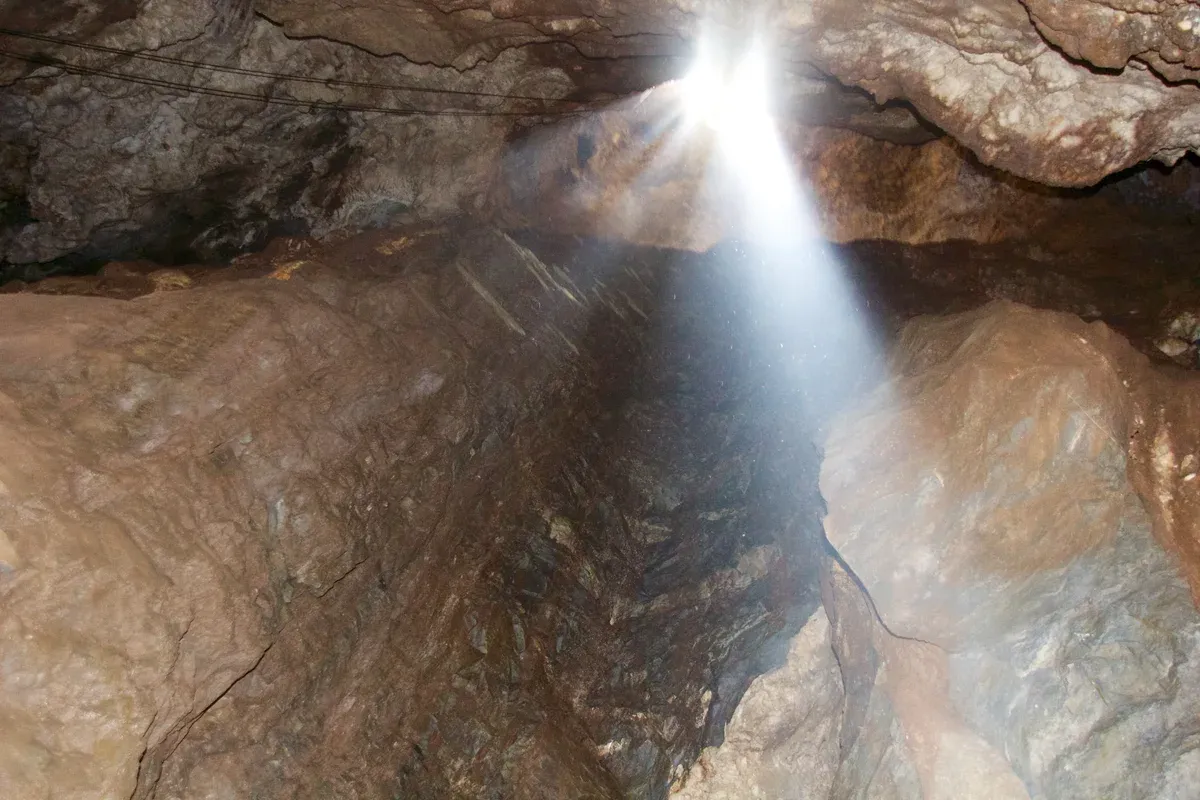
Inside Sterkfontein: the tour route runs through limestone chambers at a constant 20°C, helmets on. Photo: Mike Peel, CC BY-SA 4.0, via Wikimedia Commons
The tour, step by step
Every visit is guided. Tours run hourly from 09:00 with the last departure at 15:00, each capped at about 30 people, and last one hour to one hour 30 minutes depending on the group's pace. The route drops you through the limestone formations past the excavation sites where Mrs Ples and Little Foot were found — helmets go on against low ceilings and falling rock, and the Wits safety notice is specific: there are stairs and narrow passages to crouch through, the rock can be wet and slippery so wear closed shoes, and anyone with mobility challenges or claustrophobia should think twice, because the caves are not wheelchair accessible.
What you do not need to fear is the climate: the caves hold a constant 20°C (60 °F as the Wits page prints it), which on a Highveld summer day feels like air conditioning. Back on the surface, the ticket includes the exhibition and a view into the fossil-preparation laboratory where technicians clean fresh finds; both of those are wheelchair accessible, so a mixed-ability group can split the visit. A café on site covers lunch, and the Wits team advises leaving handbags and luggage behind rather than hauling them underground.
Tickets, hours and the Monday closure
The full tour costs $9.20 (R150) adult, $7.67 (R125) for children 6 to 18, and $6.13 (R100) for pensioners with ID; under-sixes go free, with a maximum of two children per adult. The exhibition-and-prep-lab-only ticket, for those skipping the underground section, is $4.91 (R80). Opening hours are 09:00–16:00, Tuesday to Sunday, with tours hourly 09:00–15:00 — and the site closes every Monday plus 25 and 31 December. Tickets are sold on Webtickets or at the door, and Wits's own advice for school holidays is to call ahead on the day to confirm tour availability rather than trust the drive.
The Monday closure is the scheduling trap that catches most first-time planners, because half the older guides online still print pre-closure timetables. If your Johannesburg stay is a long weekend that includes a Monday, the caves drop out and Maropeng plus the reserves becomes the day — or you flip the plan and take one of the city's Monday-open sights instead, which the things to do in Johannesburg shortlist sorts by day. If a Monday is your only free day, a Soweto day is the standard substitute.
Maropeng Visitor Centre: what we could and could not verify
Maropeng is the purpose-built visitor centre of the Cradle — the grass-covered burial-mound building opened by President Thabo Mbeki on 7 December 2005, its name Setswana for the place where we come from. It is also the part of the Cradle where published information currently runs out.
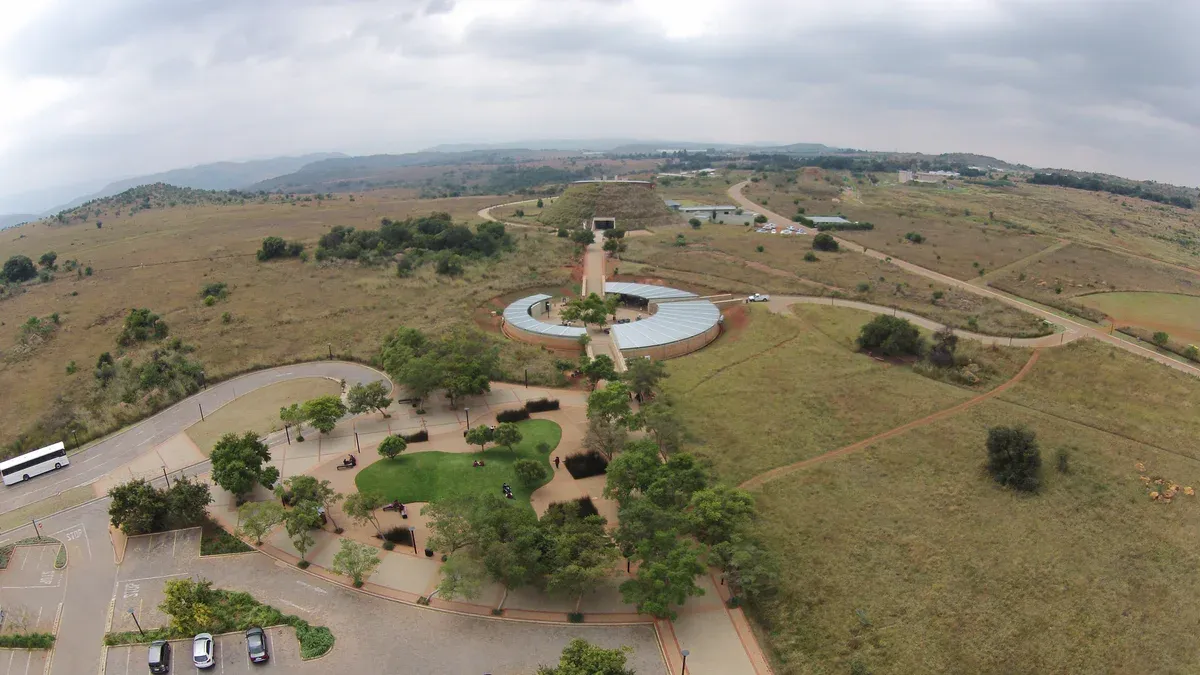
Maropeng's burial-mound building — the Cradle's visitor centre since December 2005, and currently the site whose own publishing lags. Photo: South African Tourism, CC BY 2.0, via Wikimedia Commons
Here is the finding stated plainly: at check, Maropeng's own website was stale and unreachable, so its admission price, its opening hours and any combined Maropeng-plus-Sterkfontein ticket are not stated anywhere we could verify. We will not print a rand figure for Maropeng from memory or from years-old booking pages, because both have been wrong before — the empty price cell in the table above is the honest cell. If Maropeng is the one thing you came for, phone before you drive; the Wits Sterkfontein team, whose own site is current, can also confirm on the day what is operating across the valley.
What can be said with confidence is what the place is: an award-winning, self-guided, interactive exhibition that runs from the formation of the planet to the human origin story, with fossils, stone tools up to a million years old, and the boat ride through the elements that generations of school groups remember. Its former listings described a tour of roughly two hours. It sits about a 15-minute drive from the Sterkfontein Caves on the Cradle's country roads — our measure from the two GPS pins — and the two together make the standard Cradle day — which is exactly what the guided day with transfers and the Viator half-day with entries are built around. For the paying detail, the Cradle of Humankind tickets page keeps the Maropeng row honest.
How much time to give the Cradle
The venue publishes no visit-length figure, so these three routings are ours, built from the Wits tour timetable — hourly departures 09:00 to 15:00 — and the drive between the two anchor sites.
The variable that decides the routing is the tour clock, not your stamina: miss the 15:00 last departure and the underground half of the day is gone, whatever time your entry ticket says. Work backwards from the tour time you want and add the drives.
| Routing | What you get | What it skips | Time and cost |
|---|---|---|---|
| The caves-only visit | One Sterkfontein guided tour with the exhibition and prep-lab view either side | Maropeng, the reserves, the restaurants along the R512 | About 2 hours on site; $9.20 (R150) adult, hourly 09:00–15:00 |
| The standard Cradle day | A 10:00 cave tour, the drive across the valley, the Maropeng exhibition after lunch | Nothing essential, though the Rhino and Lion Reserve needs its own half day | About 5–6 hours; $9.20 (R150) plus whatever Maropeng quotes on the day — its price is not stated at check |
| The driven day from your hotel | The guided day with transfers or the full-day loop picks up, schedules and books | The freedom to linger — the vehicle sets the pace | About 5 hours door to door; $131 / $116.04 as listed, free cancellation to 24 hours |
The discoveries in ten dates
A century of digging, from the skull that started the argument to the chamber still being argued about, with the dates that decide what you are standing on. Every line is argued in the sections above.
-
1924
The Taung Child starts it
Raymond Dart's juvenile Australopithecus africanus skull from Taung introduces a human ancestor from Africa — the species Mrs Ples will later confirm at Sterkfontein. [Wikipedia, Cradle of Humankind]
-
1935
Broom arrives at Sterkfontein
Robert Broom finds the first human fossils at Sterkfontein and begins work at the site that will define the Cradle. [Wikipedia]
-
1938
Kromdraai's other branch
A schoolboy brings Dart skull fragments from Kromdraai, identified as Paranthropus robustus — a cousin lineage, minutes from the Sterkfontein gate. [Wikipedia]
-
1947
Mrs Ples
Broom and John T. Robinson find the 2.3-million-year-old Australopithecus africanus skull that corroborated the Taung discovery and put Africa at the centre of the human story. [Wikipedia]
-
1948
Swartkrans joins
Broom identifies the first hominid remains from Swartkrans cave, the Cradle's second great site, a few kilometres from Sterkfontein. [Wikipedia]
-
1966
Tobias begins the long dig
Phillip Tobias starts excavations at Sterkfontein that continue to this day — the longest continuously running fossil excavations in the world. [Wikipedia]
-
1997
Little Foot
Ron Clarke discovers the near-complete Australopithecus skeleton of Little Foot at Sterkfontein, first dated to about 3.3 million years, more recent work suggesting closer to 2.5 million. [Wikipedia]
-
2005
Maropeng opens
President Thabo Mbeki opens the Maropeng Visitor Centre on 7 December 2005 — Maropeng meaning the place where we come from. [Wikipedia]
-
2008
Sediba at Malapa
Lee Berger finds the partial remains of two Australopithecus sediba individuals, who lived between 1.78 and 1.95 million years ago, at the Malapa Fossil Site; excavations there have been on hold since 2009. [Wikipedia]
-
2015
Homo naledi announced
Berger's team announces Homo naledi from the Rising Star cave system's Dinaledi Chamber — more than 1,500 bone specimens from at least 15 individuals, the most extensive single-species discovery ever made in Africa. [Wikipedia]
Discovery dates as recorded on Wikipedia, Cradle of Humankind, read for this guide; current visiting facts on this page come from the Wits Sterkfontein site and the facts pack checked on this page's review date.
Five things most visitors do not know about the Cradle
All five come off the operator and reference pages, and each one changes a practical decision about the day.
- The caves are run by a university, not a tourism company. Since the April 2025 reopening, Sterkfontein is a Wits University operation with its own visitor site — which is why the current prices live there and not on any legacy Cradle page [facts pack 1, verified against sterkfonteincaves.wits.ac.za]. - Sterkfontein produced more than a third of all early hominid fossils found before 2010. One site, that share of the world record — the reason the half-day drive out of Johannesburg is not optional for anyone serious about the story [Wikipedia, Cradle of Humankind]. - The cave temperature never changes. The Wits information page states the caves hold a constant 20°C, so the underground hour is a jacket-and-comfortable-shoes affair regardless of the Highveld weather above [sterkfonteincaves.wits.ac.za, general information]. - Helmets are part of the tour, not decoration. The safety notice requires a helmet against low ceilings and falling rock, and warns of stairs, crouching sections and slippery surfaces — it is a physical outing, not a museum walk [sterkfonteincaves.wits.ac.za, important safety notice]. - Maropeng opened expecting half a million visitors a year, and its name is a sentence about you. Maropeng means the place where we come from in Setswana, and the centre was opened on 7 December 2005 with exactly that ambition [Wikipedia, citing News24, December 2005].
At the Cradle: dos and don'ts
Every line here is a decision argued somewhere above, compressed for the morning you are standing at the cave gate.
Do
- Book or arrive for a morning tour — hourly departures run 09:00 to 15:00, and the earlier slots leave the whole afternoon for Maropeng or the reserves
- Wear closed, non-slip shoes and bring a light layer; the caves sit at a constant 20°C and the rock can be wet
- Call ahead on the day during school holidays — that is Wits's own advice for confirming tours are running
- Do the caves first, Maropeng second: the underground hour is the fixed appointment, the exhibition floats
- Leave handbags and luggage in the car — the Wits notice asks visitors underground to travel light
- Check the day of the week twice: Tuesday to Sunday only, and 25 and 31 December are closed
Don't
- Don't plan the caves on a Monday — the closure is weekly and non-negotiable
- Don't bring anyone who cannot manage stairs, crouching and narrow passages; the caves are not wheelchair accessible, though the exhibition and prep lab are
- Don't quote a Maropeng price from an old blog post — the centre's own site was stale and unreachable at check, so there is no current figure to quote
- Don't count on a combined Maropeng-plus-Sterkfontein ticket: no combined ticket is stated at check either
- Don't try to cover the Cradle and Hartbeespoort Dam in one afternoon — they are different directions of the same sprawl
Cradle of Humankind map: the two anchor sites
The two pins that matter for a first visit — the caves you can book today and the visitor centre whose published information has gone dark — with the country-road logic of the valley between them.
- 1 Sterkfontein Caves, Kromdraai RoadThe bookable sight: Wits-run guided tours hourly 09:00–15:00, Tue–Sun 09:00–16:00, closed Mondays; $9.20 (R150) adult full tour
- 2 Maropeng Visitor Centre (approximate pin)The burial-mound exhibition building, opened December 2005 — its own site publishes no current price, hours or combined ticket, and no official coordinates either, so this pin is placed from the OpenStreetMap building record on Hartbeeshoek Pad
- 3 Lion & Safari Park, R512The wildlife half-day on the Cradle's northern edge — entry free, activities from $24.5 (R400) self-drive; our park guide has the rates
Numbers match the pins on the map.
Next stops near the Cradle
Distances are our estimates from the GPS coordinates; the Cradle sits in farm-road country, so every pairing below is a drive.
Lion & Safari Park
Lions, cheetahs and giraffe-feeding on the R512 between the Cradle and Hartbeespoort — entry is free and you pay per activity, which makes it the easiest add-on to a cave morning. The Lion & Safari Park guide carries the full rates grid.
about 30 min drive Read the guideLesedi Cultural Village
Five cultural homesteads, a village tour and dance programme running twice daily — a natural afternoon after the caves. Note that day-visitor prices are not published in rand at check; the Lesedi guide explains what is and is not stated.
about 35 min drive Read the guideHartbeespoort
The dam, the aerial cableway and the craft markets — the classic second half of a Cradle day if you start early. The Hartbeespoort day-trip guide strings the two together, and the day trips hub ranks all the options.
about 60 min drive Read the guideQuestions about the Cradle of Humankind
How much does it cost to go to the Cradle of Humankind?
The verifiable figure is Sterkfontein: $9.20 (R150) adult for the full guided cave tour including the exhibition, with children 6–18 at $7.67 (R125), pensioners at $6.13 (R100) and under-sixes free. Maropeng's own price is not stated at check because its website was stale and unreachable — the honest options are on the tickets page, and guided days with transfers run from about $116 as listed.
Is the Cradle of Humankind worth visiting?
If the human story interests you at all, yes: this is the largest known concentration of human ancestral remains in the world, the cave tour runs through active excavation ground, and the whole visit costs less than a city-centre dinner. The honest caveat is the driving — the sites are scattered along country roads — so the value of a guided day with transfers is highest for visitors without a car.
What activities are offered at the Cradle of Humankind?
The core visit is the guided Sterkfontein cave tour plus the exhibition and fossil-prep lab. Around it sit the Maropeng exhibition, the Rhino and Lion Nature Reserve on the Cradle's edge, craft studios and restaurants along the R512, and the Lion & Safari Park half an hour north. The tour cards above bundle the main pair with transport from Johannesburg.
Why is it called the Cradle of Humankind?
Because the fossils found here — Mrs Ples in 1947, Little Foot in 1997, Australopithecus sediba in 2008, Homo naledi announced in 2015 — make the strongest single case anywhere that humankind originated in Africa. UNESCO's registered name for the listing is the Fossil Hominid Sites of South Africa; the Cradle name is the one that stuck.
Where is the Cradle of Humankind and how do you get there?
About 50 km northwest of Johannesburg in Gauteng, centred on the Sterkfontein Caves on Kromdraai Road outside Krugersdorp (GPS −26.01604, 27.73456) — roughly an hour from the city centre by road, our estimate. There is no train or bus worth recommending for a first visit; you drive, ride-hail, or take a guided day with hotel pickup. The getting around guide covers the driving rules.
Is Sterkfontein Caves open on Mondays?
No — the caves close every Monday, and on 25 and 31 December, running Tuesday to Sunday 09:00–16:00 with hourly tours from 09:00 to 15:00. Monday plans should pivot to the city sights that do open, which the museums and city shortlists sort out, or to Soweto.
What is the difference between Sterkfontein Caves and Maropeng?
Sterkfontein is the fossil site itself: a guided underground tour, helmets on, past the excavation localities, with the exhibition and prep lab above ground. Maropeng is the interpretive visitor centre: a self-guided, interactive exhibition in the burial-mound building, no caves involved. A first visit does both — caves for the place, Maropeng for the story — and the tickets page is candid about which one currently publishes prices.
How long does the Sterkfontein cave tour take?
One hour to one hour 30 depending on the group, with about 30 people per tour and departures hourly from 09:00 to 15:00. Add the exhibition and prep lab either side and the caves occupy about two hours; a full Cradle day with Maropeng runs five to six hours door to door.
The Cradle on film: three visits worth watching
Three visitor films of the Maropeng building and the Cradle landscape, useful for a sense of the valley's scale before you drive it.
MAROPENG - THE CRADLE OF HUMANKIND, Johannesburg, South Africa Tourism
A full walk of the Maropeng exhibition and grounds — the clearest preview of what the visitor centre actually contains.
Video: FreeBirdPeckSouth Africa- Johannesburg, Maropeng, Cradle of Humankind
A travel-camera pass through the Cradle landscape and the visitor centre, good for the drive's feel before you rent a car.
Video: Kurts Travel VideosEXPLORE MAROPENG THE CRADLE OF HUMANKIND
A recent short visit film, the freshest of the three — useful as a current-state check on the Maropeng site.
Video: CounieyVideos load from YouTube only when you press play.
Prices, hours and terms are set by the venue or operator and confirmed at checkout.
We may earn a commission if you book through one of our links, at no extra cost to you. Full affiliate disclosure