 Johannesburg Travel Guide
Is a Soweto Tour Worth It? An Honest Answer
Is a Soweto tour worth it? For a first visit to Johannesburg: yes — and the honest version of that answer has more to do with context than with safety. Soweto is the most historically loaded half-day in South Africa: one street that housed two Nobel Peace Prize winners, the corner where the 1976 uprising started, a church that still carries the bullet marks. What a guided visit buys is the story that turns houses into history, plus a resident guide whose presence changes how the street reads. This post argues both sides: what the seven cards in our comparison cost and add, what you can honestly do alone for less, and who should skip the tour entirely. Everything else this trip needs is routed from the Johannesburg city guide homepage.

Quick answer The verdict, what it costs, when the answer is no
Yes — a guided Soweto tour is worth it for a first visit. The card we would book is the four-hour walking tour with a local guide and lunch: $43, the group's best reviews, and a resident guide, which is the entire point of the format. The answer flips to no mainly for repeat Johannesburg visitors on a tight budget, who can do the two Vilakazi anchors alone in daylight.
Key takeaways
- The seven cards run from $43 to $164.59; most shared half-days sit between $58 and $120 — the full comparison table is below
- Venue fees are usually extra: Mandela House charges $11.35 (R185) international adults, and the Hector Pieterson Memorial publishes no adult rate at all
- The safety question is a frame, not a verdict — the area-by-area picture lives on safety and scams
- The alternative to booking anything: read the Soweto visitor guide and go DIY in daylight
What a guided Soweto tour actually is

Vilakazi Street at the end of the day. Photo: Yasield, CC0, via Wikimedia Commons
Almost every card in the group is the same skeleton at different prices: a vehicle collects you at your hotel, drives you the 30–40 minutes south-west to Orlando West, and works through the anchor sights — Vilakazi Street with Mandela's house at number 8115, the Hector Pieterson Memorial two blocks away on Khumalo Street, the painted Orlando Towers, usually a market or community project — with a guide who lives in Soweto doing the talking. The variations are real, though: walking it instead of driving it, tuk-tuks, an evening version with dinner, private versus shared, and combinations that add the Apartheid Museum on the city side.
The format exists for two reasons, and only one of them is what people assume. The guide is the product: a resident explaining a place where the history sits in ordinary houses and street corners. The second reason is routing — the sights sit a few driving minutes apart rather than along one promenade, and a local walking beside you changes how the streets between them read. The Soweto visitor guide covers the sights themselves; this post is only about whether the guided format earns its fee.
What the money buys: the seven cards, compared
Every Soweto-group card on this site, with the platforms' own listed prices and what each one adds over the card below it. The spread is wider than most people expect, and the cheapest card is also the best-reviewed.
Read the table by the last column: the cards do not stack, they substitute for each other, and paying more buys scope (private, museum, full day) rather than a better version of the same four hours.
| Tour | Length | Listed price | What it adds |
|---|---|---|---|
| Walking tour with a local guide and lunch | 4 hours | $43 | The streets between the sights, lunch where the neighbourhood eats, small groups — 4.91 from 823 reviews, the best in the group |
| Tuk-tuk tour | 2.5 hours | $58 | The same story with the wind in it: open sides, three wheels, the shortest format — 4.94 from 104 reviews |
| Half-day with hotel pickup | 4 hours | $84 | The standard drive-by of the landmarks with pickup included, no museum detour — new card, 3 reviews so far |
| Soweto + Apartheid Museum, private | 5 hours | $89 | A private vehicle and the museum bolted on; the middle price between shared days and full privates |
| Night tour | 5 hours | $110 | The towers lit, dinner included, the evening version — moves between stops by vehicle, as night visits should |
| Half-day with a local guide | 4 hours | $120 | The shared flagship: a guide who still lives in Soweto, 4.84 from 188 reviews, the deepest commentary of the shared cards |
| Private full day, Soweto + Johannesburg | 7 hours | $164.59 | Both cities in one private day, and the only card with pickup from Pretoria as well as Johannesburg |
Platform prices are listed in dollars and billed in your account's currency; official rand prices are the published ones, and our dollar figures for them use $1 = R16.30. Two venue fees you will meet outside almost every card: Mandela House at $11.35 (R185) international adults — card only, the house is cashless — and the Hector Pieterson Memorial, whose official page lists elderly at $1.84 (R30), students and teenagers at $0.61 (R10) and children at $0.31 (R5) but publishes no adult rate. The Orlando Towers cannot be costed right now: the operator's own site is an under-maintenance page announcing "coming soon", so treat any bungee price you find elsewhere as unverified. in Q3 2026
What a guide adds over going alone
The context is the difference
Soweto's sights are small and ordinary on arrival: a red-brick house behind a fence, a memorial at a street corner, a church. Without anyone to read them, Mandela's house is a six-room house and the memorial is a wall with a photograph. The best card in the group is the cheapest precisely because the walking format puts a resident next to you for four hours — the reviews that score highest are the ones that mention a specific guide by name, one who "still lives there, making it authentic", a book recommendation, an argument worth having.
That is what the fee buys: a person, not a bus.
The arithmetic, honestly done
Doing the two Vilakazi anchors alone is genuinely possible: a rideshare from central Johannesburg, Vilakazi Street for free, Mandela House at $11.35 (R185), the memorial's fees from $0.31 (R5) — a DIY half-day inside the price of one tour seat, with the honest trade-offs that you will not get the streets read for you, the routing is on you, and the guided versions use daylight windows that experience has already picked. For a first visit we would still book the walk; for a return visitor who has read the Soweto guide properly, DIY is a defensible answer, not a reckless one.
The case against — said plainly
The strongest argument against the format is the one the internet actually argues about: whether a paid peek at a township is respectful or voyeuristic — the thread titles run from "worth it" to "crass exploitation". The honest resolution is that the ethics sit with the format, not the place: a resident-owned walking business that pays local guides and eats local lunch is the opposite of a drive-by, and the drive-by is what you should refuse to book. Skip the tour, not the place.
Three groups should genuinely not book: repeat Johannesburg visitors who have already done Soweto and its anchors; travellers on a hard budget, for whom the DIY arithmetic above exists; and anyone who wants a safari park or a cultural theme park — that is not what Soweto is, and Lesedi Cultural Village does that job differently. Everyone else gets an unusually good deal: the best-reviewed card in the group is also the cheapest, which almost never happens in travel.
- Book the walking format over the drive-by: local guide, small group, lunch in the neighbourhood
- Refuse anything that promises to "see the township" from a window in under two hours
- Already been? Skip the repeat and spend the day on the city's other sides
And the safety question
It is the unspoken reason people book, so say it: Johannesburg's violent crime problem is real, and Soweto is part of the city, not an exception to it. The working frame for a visitor is boring and effective — daylight hours, vehicle between the spread-out sights, a resident guide for the street-level parts, and no solo night walking (the night card moves by vehicle for exactly that reason). A guided tour buys you all four habits by default, which is why "is it safe?" and "is a tour worth it?" end up being the same question for most first-timers.
The area-by-area detail, the scam list and the city-wide picture live on safety and scams — and nothing there should scare you off Vilakazi Street at ten in the morning.
- Daylight for anything on foot
- Vehicle between sights — they are driving minutes apart, not one promenade
- Ask before photographing people or stalls
So, book one?
If it is your first visit to Johannesburg
yes. Book the walking tour with lunch — $43, four hours, a resident guide, the group's best reviews.
If you want the deepest shared version, not the cheapest
the half-day with a local guide at $120 is the flagship — same skeleton, more commentary, 188 reviews behind its 4.84.
If you have one day and the Apartheid Museum is non-negotiable
book the private museum combination at $89 rather than losing the afternoon to logistics — the museum closes Mondays, so check its days first.
If you have already seen Soweto
no. Do not repeat for the sake of the format; put the day into the rest of the city.
If the budget is hard and you travel alert
the DIY route through the Soweto guide is defensible: daylight, the two Vilakazi anchors, venue fees under the price of one tour seat.
If you are travelling with kids
the tuk-tuk at $58 is the format children actually remember — the family page has the rest of the kid arithmetic.
The shortlist
Three cards carry almost every decision: the cheap one, the flagship and the fun one. Each links to the operator's page with the live calendar.
 from $43
Soweto: Walking Tour with a Local Guide and Lunch
Walk Soweto's streets with a local resident, eat where the neighbourhood eats; the most honest two hours you can buy there.
Check Availability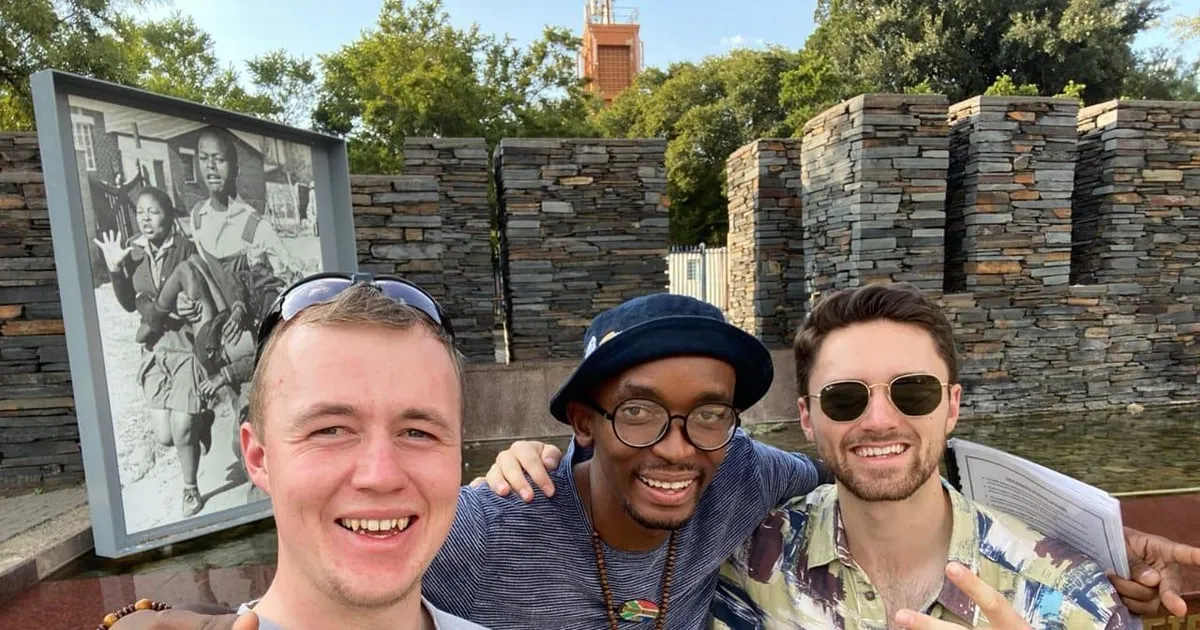 from $120
Johannesburg: Half-Day Soweto Tour with a Local Guide
Half day with a guide who lives there: Vilakazi Street, the Hector Pieterson Memorial and the Orlando Towers up close.
Check Availability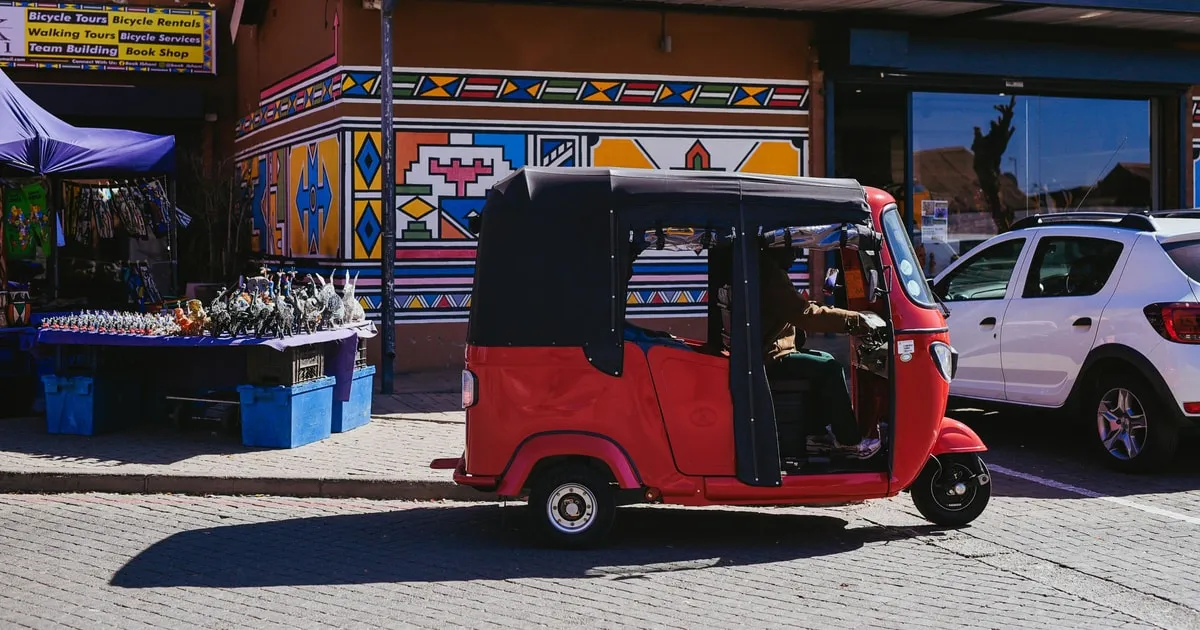 from $58
Johannesburg: Soweto Tour by Tuk Tuk
The tuk-tuk version: three wheels, open sides, the same Vilakazi Street story with the wind in it.
Check Availability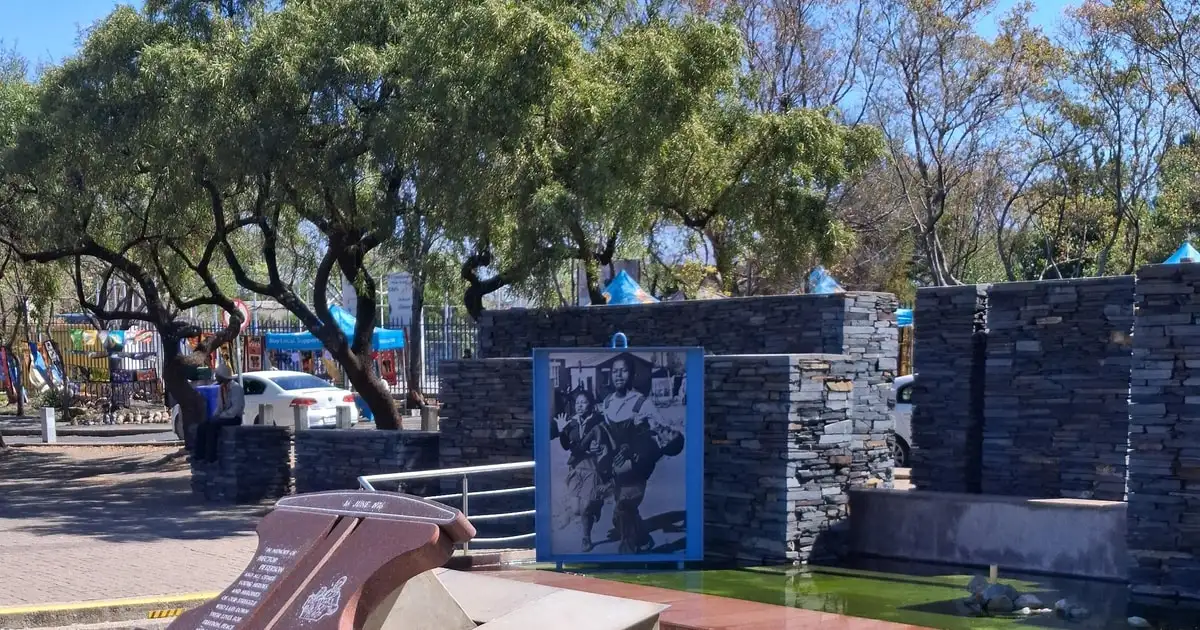 from $89
Apartheid museum and Soweto. 5 hours Private tour
Five private hours covering the museum and Soweto at your own pace; the middle price between shared days and full privates.
Check AvailabilityPrices, ratings and details are the platform's own. dollar figures are the listed prices — the platform bills in your account's currency.
Questions people ask before booking
What is the best tour of Soweto?
For most first visits, the four-hour walking tour with a local guide and lunch: $43, rated 4.91 from 823 reviews, small groups, and a resident guide — the format at its most honest. If you would rather ride, the $120 half-day with a guide who still lives in Soweto is the deepest shared option. The full seven-card comparison is in the table above.
Is it safe to visit Soweto?
With the boring habits — daylight, vehicle between sights, a resident guide for the street parts — thousands of visitors do it every week without incident, and Vilakazi Street carries its own visible security. Solo night walking is the thing to refuse, not the visit itself. The area-by-area detail and the scam list are on safety and scams.
Why do tourists visit Soweto?
Because modern South African history is concentrated here in walkable form: the street with two Nobel Peace Prize winners, the corner where the 1976 uprising started, and a church that keeps its bullet marks. The Soweto visitor guide walks each stop with its fees.
How much does a Soweto tour cost?
From $43 (walking, four hours, lunch included) to $164.59 (private full day, both cities), with shared half-days between $58 and $120. Venue fees are usually extra — Mandela House is $11.35 (R185) international adult, and most cards add it on top.
Do you need a guide for Soweto?
Strictly, no: the two Vilakazi anchors are doable alone in daylight, and the visitor guide gives you the story to walk them with. But the guide is where the format earns its fee — the difference between seeing a small brick house and understanding whose house it was. Our verdict is in the quick answer at the top.