 Johannesburg Travel Guide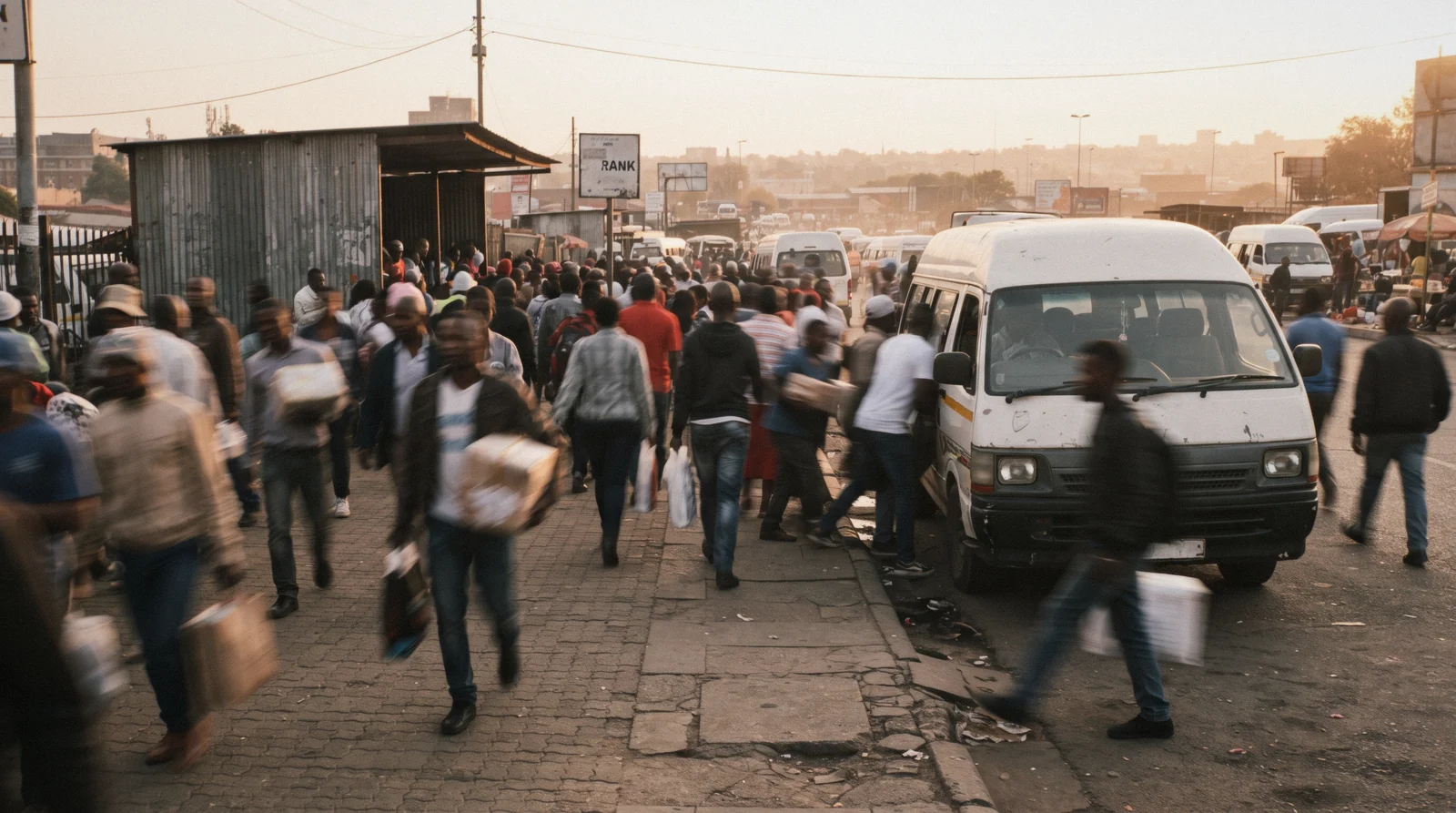
Is Johannesburg safe? It asks more street sense than most capitals, and it pays the street sense back. This page is the one place we answer the question properly: the FCDO advice quoted line by line with a practical response to each rule, the airport arrival drill, the transport ranking, the evening areas that work, and every scam the advisories name. It is written to be used, not to scare you off or cheer you aboard. Plan the rest of the stay from the Johannesburg city guide homepage.
Quick answer The verdict, the three rules, and what the advisories really say
Johannesburg asks more street sense than most capitals — and gives a good trip to the visitors who follow three rules: a car or e-hailing ride after dark, a guided Soweto, and evenings kept to defined areas. The FCDO advice, current at the time of the last check, says the crime rate is high and gets specific about where and when; neither it nor the US State Department's "exercise increased caution" advisory tells visitors to stay away. Both set rules. This page turns each rule into a decision.
Key takeaways
- Every quoted advisory line in the comparison table below has a one-sentence practical response — and the transport half of the rules continues on the getting around guide.
- The single booking that most changes the risk maths of a first visit is a half-day Soweto tour with a local guide — the township section below explains why the advisories themselves push you to a guide.
- The airport is where the advice is most specific: criminals have followed arrivals home from OR Tambo. The arrival drill is below, and the transfer options are compared on the airport-to-city page.
What the Advisories Actually Say, Line by Line
The UK Foreign Office advice for South Africa is the most specific of the major advisories for this city; the US State Department carries an "exercise increased caution" advisory whose update date is not visible in its own feed. The left column quotes or paraphrases the rule; the right column is the practical response we give every reader.
| The advice says (FCDO) | What it means in practice |
|---|---|
| "High crime rate" — violent mugging, carjacking, smash-and-grab and express kidnap are named among the risks | None of these start in a museum or a restaurant; they start with opportunity. Valuables out of sight, phone down at intersections, doors locked in the car — the whole drill is boring and it works |
| Criminals have followed victims from OR Tambo International Airport and robbed them at gunpoint | Accept no unmarked "taxi" offer inside or outside the terminal. Use the e-hailing pick-up zones, a pre-booked transfer, or the Gautrain station inside the terminal building — the arrival drill below |
| "Do not walk around after dark" — the advice names even the walk to and from Gautrain stations | Evenings run door to door by car or e-hailing. A 300-metre stroll from a station to a bar is precisely the walk the rule excludes — the evening areas below |
| Most violent crime happens in townships and informal settlements; the advice is to visit only with a reliable guide | That sentence is why a first Soweto is a booked half-day with a local guide, not a solo wander — the guided options below |
| Gautrain and e-hailing are safer than minibus taxis and Metrorail | Visitors ride the Gautrain and the e-hailing apps. The minibus taxi system moves the city, but it runs on its own rules — leave learning them to residents (transport compared) |
| Planned power cuts have "reduced significantly but can still occur", and the crime risk is higher during outages | Torch and power bank in the day bag; ATMs and card machines are the weak points — what is left of load-shedding below |
| Card skimming, drink spiking, fake officials, romance and job-offer scams, visa-agent fraud — and avoid ATM "helpers" | Each of these has a one-move counter; the named scam list below carries all of them |
| A UK licence is valid for 12 months; speed limits run 120/60 km/h; keep fuel above half; surrender valuables if carjacked | Rental counters often want a year's driving experience. Property is never worth the argument — the advisories say hand it over (driving yourself) |
Quoted lines come from the UK FCDO South Africa advice for South Africa; the US "exercise increased caution" advisory blocks automated reads, so its update date is not visible in the capture. Both advisories are country-level — they rate South Africa, not streets.
Where Evenings Actually Happen
"A car after dark" is not a curfew. Johannesburg evenings happen in three defined zones — compact, patrolled, and built around a parked car rather than a walk.
The geography is the whole answer. The crime the advisories describe is opportunist and street-level, so the evening strategy is to spend the night inside a node that has its own security and never walk between nodes. Each zone below holds restaurants, bars and something to look at within a few blocks; you arrive at the door of the zone by e-hailing and leave the same way.
That is not timid — it is exactly how the city's own residents treat these districts, and it converts the FCDO's blunt "do not walk around after dark" into a night that feels like a night.
- The pattern in all three: park (or get dropped) once, stay inside the node, ride home
- The nightlife guide names venues and districts night by night; this page holds the rules that apply to all of them
| Evening zone | What it is | How the night runs |
|---|---|---|
| Maboneng | Retrofitted manufacturing buildings on the south-eastern side of the city centre; the precinct's own site notes the name is seSotho for "place of light", and that Sundays are the busiest day when Market On Main draws the crowd | Restaurants, galleries and rooftop bars inside a handful of blocks. E-hailing to the door of the precinct, the evening on foot inside it, e-hailing home |
| Braamfontein | The student ridge above the CBD: Constitution Hill at the top of it, the free Wits Art Museum (Tue–Sat 10:00–16:00) at the corner of Jorissen and Bertha, and the bars in between | Bar-to-bar happens within two or three blocks. The FCDO's no-walking rule covers the stretch to the Gautrain station — close the night with a ride, not a hike |
| Sandton | The corporate belt north of the M1. Gautrain Sandton station — the flagship of the system — sits under Rivonia Road with 24-hour security, and Nelson Mandela Square is the district's own stage | The most conventional night out in the city: hotel bars and restaurants. The station is under the district, but the post-dark walk to it is exactly what the advice excludes — ride the last hundred metres |
The Airport: Arrival Discipline
The FCDO advice gets specific at the airport: criminals have followed victims from OR Tambo International Airport and robbed them at gunpoint. Everything about the arrival follows from that one sentence.
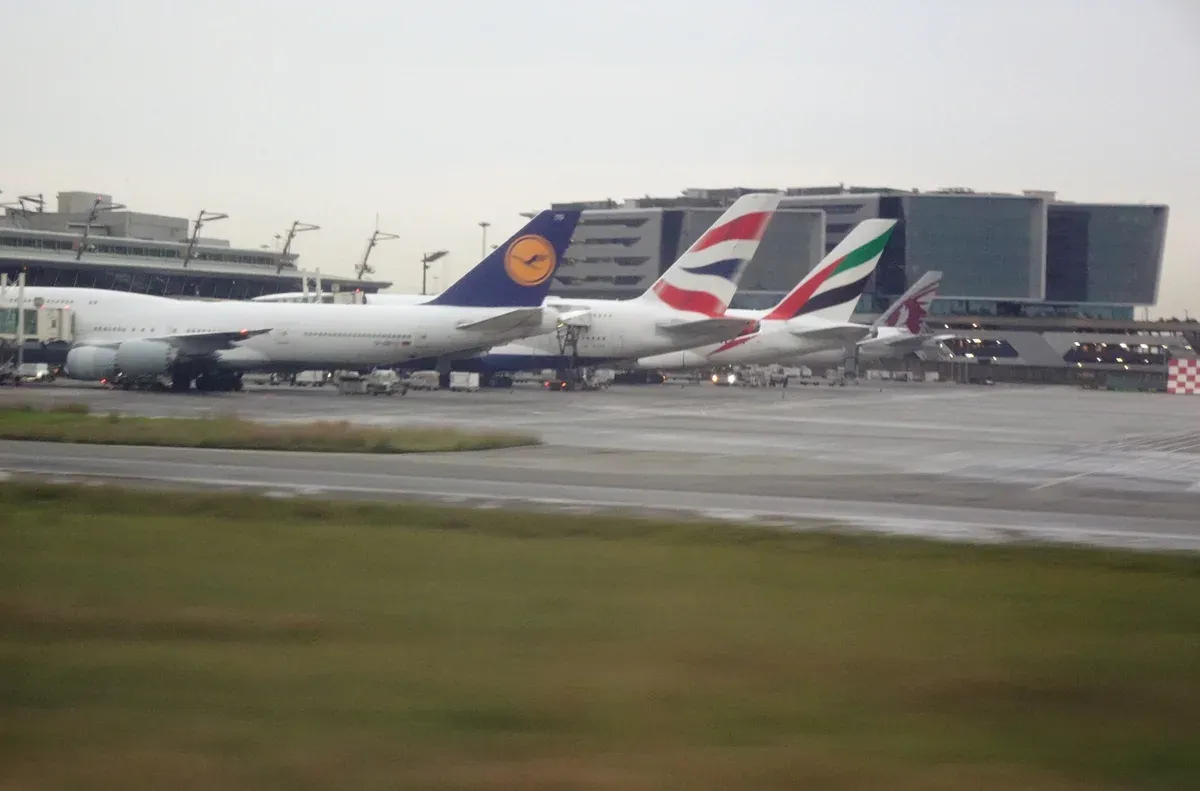
The central terminal area at OR Tambo, where every arrival drill on this page begins. Photo: Charles from Port Chester, CC BY 2.0, via Wikimedia Commons
The follow-home pattern, and why the drill exists
Follow-home robbery is not pickpocketing: the target is met at the airport, followed, and robbed later — often at gunpoint, often at a highway exit or a residential gate. The advisory names OR Tambo because that is where it has happened. The defence is to give nobody anything to follow: no unmarked vehicle, no announced cash, no predictable routine.
It is the rare safety rule that costs a traveller almost nothing, because the good options are also the comfortable ones.
The arrival drill, step by step
Land, and treat the next fifteen minutes as the whole task. Change no money on the arrivals floor beyond what an ATM inside a bank branch would give you — better, use the mall machines later. Say no to anyone offering a ride who did not come with your name on a sign: the legitimate options are the official e-hailing pick-up zones, a pre-booked transfer with your name displayed, or the Gautrain station that sits inside the terminal building itself, which runs to Sandton and the city from early morning to around nine at night (the airport station's own posted hours are 05:12–21:14).
If someone is meeting you, agree the meeting point indoors. The airport-to-city page prices and compares all three routes.
- No unmarked offers — anyone soliciting inside arrivals is not your driver
- E-hailing: app to the designated pick-up zone, plate and driver matched before the door opens
- Gautrain: the station is in the terminal; a card or a contactless bank card is enough
- Driving yourself: fuel above half before you leave the airport's orbit, doors locked, bags out of sight — the FCDO's own driving lines
Getting Around: the Advisory's Own Ranking
The FCDO does not leave transport to taste — it ranks the options. Gautrain and e-hailing first; minibus taxis and Metrorail behind. Here is the ranking turned into a daily habit.
Nothing on this page is a licence to drive badly, and one line is a relief to anyone picking up a rental: the Gauteng e-tolls ended — the gantries switched off at midnight on 11 April 2024 — so no e-toll account or gantry charge should appear on a rental quote. The rest of the driving advice is the FCDO's: a UK licence is valid for 12 months, rental firms often want a year's experience, limits run 120 km/h on highways and 60 in built-up areas, keep the tank above half, and keep doors locked at intersections because smash-and-grabs happen there. The full system — the red bus, Rea Vaya, parking — lives on the getting around guide.
| Option | The advisory's view | What visitors actually do |
|---|---|---|
| Gautrain | Named as the safer choice | The airport line from the terminal station, plus the Sandton–Rosebank–Park spine. Station hours run to about 21:15, so it is a daylight-and-evening tool, not a late-night one |
| E-hailing | Named as safer than minibus taxis and Metrorail | The default after dark: app-ordered, door to door, trip tracked. Match plate and driver before opening the door, sit in the back, and share the trip |
| Minibus taxis | Ranked behind the Gautrain and e-hailing | The city's real transit network and not a visitor system — routes are learned, not mapped. Leave it to residents |
| Metrorail | Ranked behind the Gautrain and e-hailing | The commuter rail the advisory lists on the wrong side of the line. Visitors fly the Gautrain instead |
| Driving yourself | Regulated, not discouraged | Daylight-friendly with the rules above; at night keep it to point-to-point routes you already know. Surrender the car if carjacked — property before safety, in the advisory's own words |
Walking: Daylight Yes, Dark No
The walking rules are the simplest on this page and the most often broken, because the distance always looks short. The FCDO draws the line at dusk, not at neighbourhood quality.
In daylight, defined areas take walking gladly: the Maboneng core, the Braamfontein ridge around Constitution Hill and the Wits Art Museum, the CBD grid around the Market Theatre complex at lunch hour, and Vilakazi Street inside its Soweto precinct crowd. These are streets with people, purpose and eyes on them, and a few blocks between a café and a gallery is ordinary city life — Johannesburgers make exactly these walks.
After dark the same few blocks change rules. "Do not walk around after dark" is the FCDO's whole sentence, and it explicitly includes the walk to and from Gautrain stations — the 400 metres from Sandton station to a hotel included. Nothing about the rule is negotiable at the margin: the distance is short, so the ride is cheap and takes three minutes. Phone the e-hailing car from inside the bar, wait indoors for it, and the evening keeps its shape. If the last Gautrain is missed, that is what the e-hailing rank outside the station is for — the station plaza is where the cars queue, not where you walk.
Townships: the Guided Frame
The advisory sentence most visitors never read: most violent crime happens in townships and informal settlements, and the FCDO's instruction is to visit them only with a reliable guide. That makes a guided Soweto not an upsell but the official method.
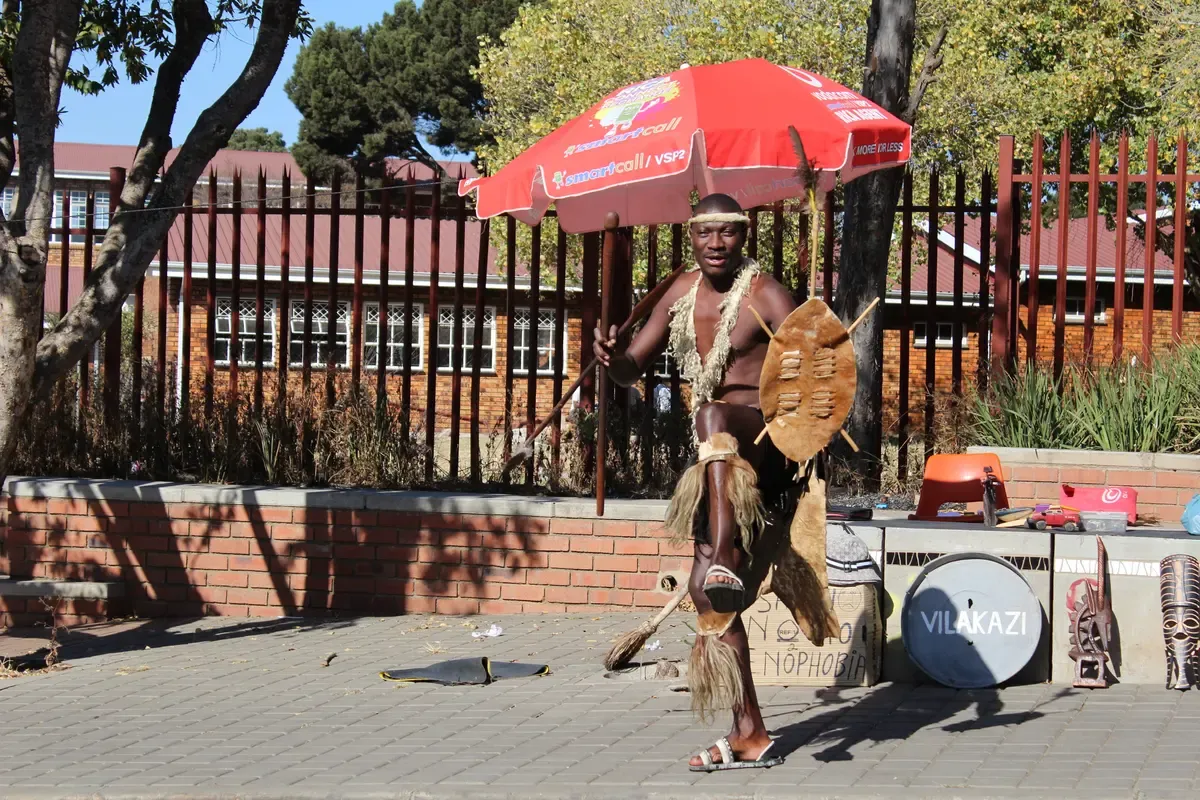
Vilakazi Street on a precinct morning — the part of Soweto that visits best inside a guided frame. Photo: Fata)(Morgana, CC BY 4.0, via Wikimedia Commons
What the guide actually removes
A township is a whole city with its own street logic: which corner is commerce and which is territory, where a car parks and who watches it, when a camera is welcome and when it is not. A local guide carries that logic so you do not have to learn it — which is the practical content behind the FCDO's word "reliable". The good tours are built by people who live where they guide: the half-day Soweto tour with a local guide is run by Soweto residents, and the walking tour with lunch eats where it walks.
Both keep to daylight, both handle the driving, and both turn the visit from an intrusion into a hosted one.
The practical frame for a first Soweto
Book the morning, not the afternoon, so the visit ends in daylight. Vilakazi Street — Mandela House at number 8115, the memorial a street away — is the precinct where visitors concentrate, and Mandela House itself has been cashless since 1 December 2025, so the card matters more than the notes. The Soweto guide covers the street in full, our Soweto-tour verdict answers the booking question honestly, and the deeper history sits on the 1976 uprising page.
A guided Hillbrow walk (This is Hillbrow) applies the same frame to the district everyone has an opinion about: a local resident walks you through what the headlines flatten.
The Scam List, Named
The FCDO names its scams specifically, which makes this the shortest honest scam section in travel: every entry below is theirs, each with the one move that kills it.
Notice what the list does not contain: Johannesburg has no ticket-tout problem at museum doors and no restaurant-bill games worth a name. The scams that work here are money-handling scams and trust scams — which is why the counters are all the same shape: keep the card in sight, keep the money in banks, and never let urgency make the decision.
| The scam | The move that kills it |
|---|---|
| ATM "helpers" — a stranger offering to assist or distract at the machine | Refuse all help, use machines inside bank branches or secure malls, and cover the keypad |
| Street currency changers | The FCDO's rule is blunt: change money only in banks or secure malls. Nobody legitimate changes money on a pavement |
| Card skimming | Card never leaves your sight; restaurants bring the machine to the table. The cashless venues — Mandela House among them — remove the risk by removing the cash |
| Fake officials — someone in a uniform or with a badge demanding an on-the-spot fine or a search | Real police do not collect cash at the kerb. Offer to continue at the nearest police station; a genuine officer walks you there |
| Drink spiking | Nightlife in the group, drinks from the waiter not the stranger, and the first round watched from the pour (the nightlife guide for the venues where this is easy) |
| Romance and job-offer scams | Pre-trip fraud: money never moves for someone you have not met, and a job that asks for a fee is not a job |
| Visa-agent fraud | Most visitors do not need an agent at all: the Department of Home Affairs exempts the US, UK, Germany, France and many others for up to 90 days, and formal applications run through VFS Global. A fee for a "guaranteed tourist visa" is the scam itself — check the exempt list before paying anyone (plan a trip) |
| Express kidnap — a short, violent abduction forced to drain ATMs | Named in the FCDO's crime list, and its counter is the same as the carjacking rule: carry less, hand over what is asked, property before safety |
Load-shedding Today: What Is Actually Left
The national power-cut schedule that defined South African travel planning has been off for a long stretch now — but one residual measure still touches Gauteng, and the advisories keep the outage clause in.
The numbers first. Eskom’s own statement records 497 consecutive days without load shedding, unbroken since 16 May 2025, with the energy availability factor at 70.44% for the week. What has not stopped is Eskom's separate "load reduction" — targeted local cuts to protect overloaded networks — which still touches about 247,617 customers, roughly 3.4% of the country, concentrated in Gauteng and KwaZulu-Natal.
In practice a visitor notices it, if at all, as a suburb-scale dark block in the evening, not a scheduled national rota. The FCDO keeps its clause because outages are where small crime concentrates: planned cuts "reduced significantly but can still occur", and the advice lists hotels, ATMs, traffic lights and security systems as the things that feel it, with the crime risk higher during outages. The visitor version of that paragraph: carry a small torch and a power bank, charge devices at dinner, treat a dead robot (the local word for traffic light) as a four-way stop when driving, and remember that card machines ride on the mobile network — if the network is down, the cashless café is cash-free in both directions.
Nearly every Johannesburg hotel, mall and museum of consequence runs generator or inverter backup, which is why 497 days have passed with the visitor economy barely noticing.
Emergency Numbers, and How Solid They Are
Two of these numbers carry the FCDO's own authority; the other two are the standard published lines that we could not re-verify against an official page — and the difference is exactly the kind of thing this page exists to tell you.
For an airport problem, OR Tambo's own helpdesk answers on +27 11 921 6262. Report any robbery at a police station — you will need the case number for insurance — and treat the report as paperwork, not recovery: the honest expectation is the claim, not the bag. The quiet point behind the table is the one worth keeping: the numbers a visitor actually needs are two, both short, both printed above, and both work from any cellphone in the country.
| Line | Number | How solid the source is |
|---|---|---|
| Police (SAPS) | 10111 | Listed by the FCDO advice itself — as solid as a number gets on this page |
| Emergency from a cellphone | 112 | Also FCDO-listed; dials without airtime on the mobile networks |
| Ambulance (government) | 10177 | The standard published number; the official SAPS and gov.za pages were unreachable when we checked, so it rides as guidance |
| ER24 private ambulance | 084 124 | Same guidance flag — widely published, no official page fetched on the check date |
Tours Where the Guide Is the Safety Feature
Three booked outings where a local guide removes exactly the risks the advisories describe — navigation, parking, street reading — and turns them into hosted time. Prices are the operators' own USD listings; ratings are theirs too in Q3 2026.
 from $120
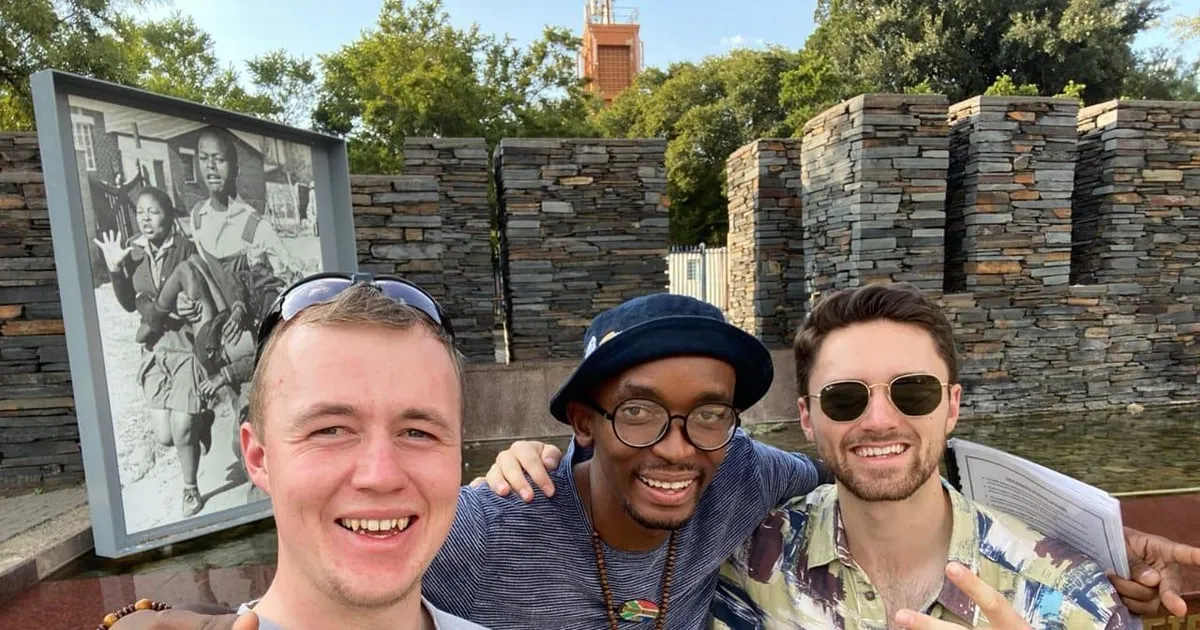
Johannesburg: Half-Day Soweto Tour with a Local Guide
Half day with a guide who lives there: Vilakazi Street, the Hector Pieterson Memorial and the Orlando Towers up close.
Check Availability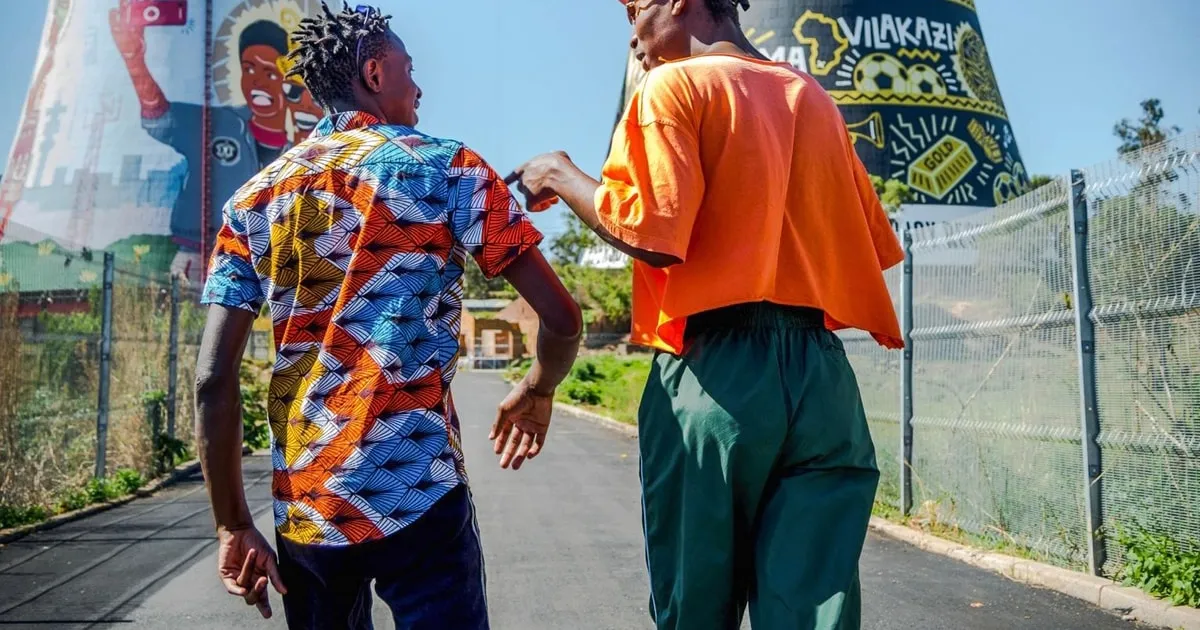 from $43
Soweto: Walking Tour with a Local Guide and Lunch
Walk Soweto's streets with a local resident, eat where the neighbourhood eats; the most honest two hours you can buy there.
Check Availability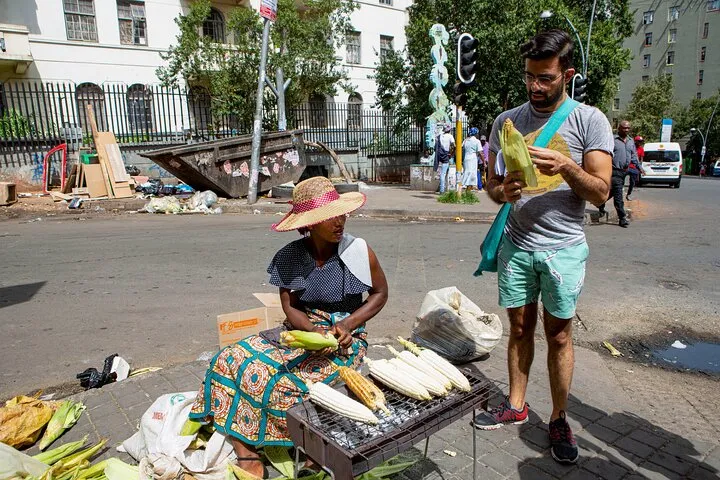 from $50.18
This is Hillbrow
Hillbrow with a guide from the neighbourhood: the tower views and the real story of the city's tallest density.
Check AvailabilityPrices, ratings and details are the platform's own. dollar figures are the listed prices — the platform bills in your account's currency.
Where the rules apply next
Drive times are our estimates in normal traffic; each page carries the practical detail for its subject.
Nightlife in Johannesburg
The after-dark rules on this page become concrete after 19:00: the nightlife guide names the rooftop and amapiano districts that run door-to-door, and the guided night out that removes the driving entirely.
Evenings Read the guideSoweto: the guided precinct
Vilakazi Street, the Hector Pieterson Memorial and the towers — what to see and what it costs, with the guided frame from this page already applied. Soweto guide.
About 25 min by car from the CBD Read the guideOR Tambo to the city
Gautrain, e-hailing and transfers compared on price and on the arrival drill from the airport section above. Airport-to-city guide.
35–45 min by road Read the guideIs Johannesburg safe? The questions readers actually ask
Is Johannesburg safe for tourists?
It is safe on conditions. The FCDO rates the crime risk high and specific, and the same advice hands you the mitigation: car or e-hailing after dark, guided township visits, no walking at night, valuables managed. Visitors who run those three rules report trips that feel energetic rather than threatening; visitors who improvise the rules are the ones the advisories are written about. Start with the advisory table above, then book the guided Soweto morning.
Is Johannesburg safe at night?
Not on foot, by the FCDO's own line — "do not walk around after dark", station walks included. But night itself is not off-limits: evenings in Maboneng, Braamfontein and Sandton run door-to-door by e-hailing inside secure nodes, and a guided night option exists even for Soweto. The city after dark is a car city; treat the ride as part of the night out.
Is Johannesburg safe for solo female travellers?
The advisories write no separate rule for women, so the honest answer applies the same rules harder: e-hailing alone rather than walking, daylight for everything optional, guided groups for townships, and accommodation chosen for the evening zone it sits in rather than the price. Solo travellers who keep to that structure move through the city with the same margin the groups have — none of the three rules assumes company.
Which is safer, Cape Town or Johannesburg?
No official source ranks the two cities, and we will not invent one. What the sources do give: both cities sit under the same country-level FCDO advice, so the rules on this page apply at the Cape too — while the street geographies differ, with Johannesburg's risk pattern centred on the CBD fringes and township edges. Our honest read after writing both guides: follow the three rules and the question stops being the one that picks your trip.
Is Johannesburg safe for American tourists?
The US State Department's own advisory is "exercise increased caution" — its middle setting, below the levels used for places it wants you to reconsider — with a terrorism-risk indicator attached. No directive to stay away. Practically, Americans run the same three rules as everyone else, and the arrival drill at OR Tambo matters on day one because that is where the advisory's most specific warning sits.
Is Uber safe in Johannesburg?
The FCDO ranks e-hailing — Uber and Bolt are the working apps — ahead of minibus taxis and Metrorail, which makes it the advisory-endorsed default. The failure mode is mismatched cars: order from indoors, check the plate and driver photo before the door opens, sit in the back, and at the airport use the designated pick-up zones rather than kerb hails.
What should I do if I am robbed?
Hand over what is asked — the FCDO's own instruction is to surrender valuables in a carjacking, because property is never worth escalation. Then get somewhere lit and staffed, call 112 (or police on 10111), and report at a police station for the case number your insurer and embassy will want. Documents copied to the cloud before the trip turn the worst hour into paperwork.
Johannesburg Safety on Film: Three Ground-Level Looks
Three videos that show the city the advisories describe — a first-hand pass at the reputation question, a walk through the evening zone, and the terminal-to-car arrival route.
How Dangerous is Johannesburg, South Africa really?
A solo traveller's first-hand answer to the exact question this page sources — useful for calibrating the gap between reputation and street level.
Video: Harry JaggardMABONENG JOHANNESBURG, IS IT SAFE? | Travel Vlog | STREETS
A street-level walk of the Maboneng precinct — the first of the [evening zones](#evenings) above, seen at pavement height.
Video: ishowLifeO.R. Tambo International Airport - Arrival Process Explained - Terminal to Uber
The arrivals walk, step by step to the e-hailing pick-up — the airport drill from this page filmed in one take.
Video: Zacc Travels AgainVideos load from YouTube only when you press play.
Prices, hours and terms are set by the venue or operator and confirmed at checkout.
We may earn a commission if you book through one of our links, at no extra cost to you. Full affiliate disclosure