 Johannesburg Travel Guide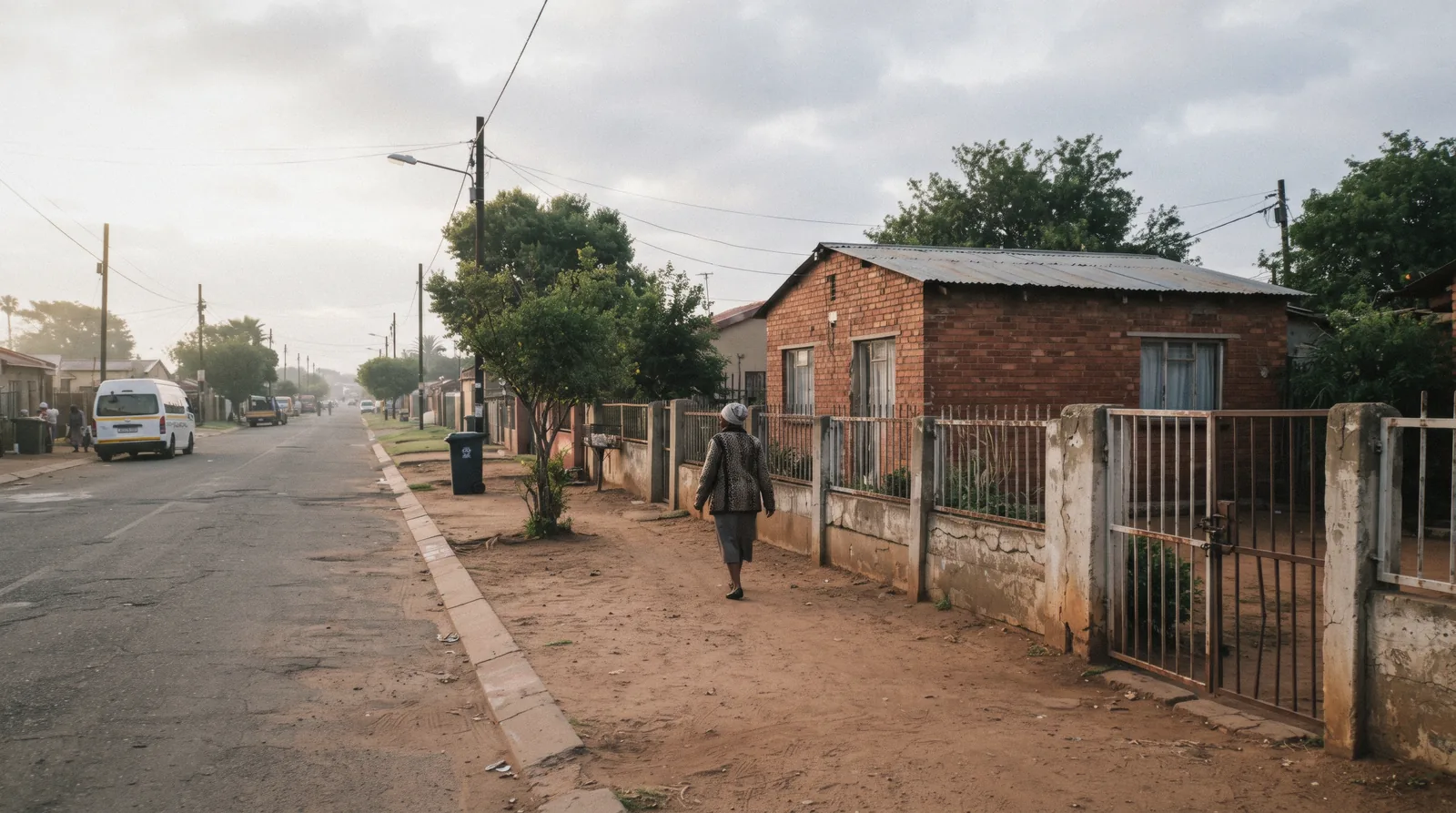
Mandela House is the small red-brick house at 8115 Vilakazi Street, Orlando West, where Nelson Mandela lived from 1946 until he went underground in 1962 — and the museum it became after a restoration completed in 2009. This page covers the official fee grid, the cashless rule, the closure days, the house's story and the immediate map; the wider township day (how to get in, whether to take a guide, what else pairs with it) lives on the Soweto guide. For the full city shortlist, start at things to do in Johannesburg. The Johannesburg travel guide homepage carries the rest of the plan.
Quick answer Fee, cashless rule, hours situation, how long, in three lines
Mandela House charges SA and African Union adults $6.44 (R105) and international adults $11.35 (R185) — dual pricing is official, not a tourist trap. The museum is cashless, closes five public holidays a year, and publishes no opening hours at all.
Key takeaways
- The fee table below is from the museum's own site; there is no separate booking step — you pay by card at the door
- Without a car, the clean way in is the combined Soweto and Johannesburg history day, which picks up from your hotel and books all three stops for you
- The Hector Pieterson Memorial and Museum sits two blocks away, so the pair fits one morning; the Soweto guide sequences the rest of the day
Key facts
Opening hours
| On the official site | hours not published by the museum — aim for late morning |
|---|
Closed Good Friday, Family Day, Christmas Day, Day of Goodwill, New Year's Day
Admission
- Adult
- $6.44 (R105) SA / African Union; $11.35 (R185) international
- Reduced
- 60+: $3.37 (R55) SA/AU, $11.35 (R185) international; ages 7–18 and students under 23 with card: $2.76 (R45) SA/AU, $4.60 (R75) international
- Free
- Under 7 for SA / African Union visitors; international infants pay $0.31 (R5)
Planning it
- Time needed
- Not stated by the museum; our routing is 45–60 minutes for the house and visitor centre
- Address
- 8115 Vilakazi Street, Orlando West, Soweto
Mandela House entry fees
Every figure below is the museum's official fee table on mandelahouse.com, converted at $1 = R16.30 — the rand amount is the one the desk charges. There are no combo tickets or passes for this museum; the only alternative to buying at the door is a guided day that bundles the entry.
Are you paying the door price for one small house, or booking the vehicle and the whole history day around it?
| Ticket | Price | Includes | Notes | Book |
|---|---|---|---|---|
| Adult, SA / African Union (18–59)South Africans and African Union nationals — bring the ID, the discount is on it | $6.44 (R105) | The house, the visitor centre exhibition | ID checked at the desk; card only | Official site |
| Adult, internationalOverseas visitors — the higher band is published policy, printed on the museum's own table | $11.35 (R185) | The house, the visitor centre exhibition | Same entry, no time slot | Official site |
| 60 and overOlder visitors on either band | $3.37 (R55) SA/AU; $11.35 (R185) international | Same entry as adult | International seniors pay the full adult rate | Official site |
| Ages 7–18 and students under 23Families and students — school groups book into the same band | $2.76 (R45) SA/AU; $4.60 (R75) international | Same entry as adult | Students need a valid student card | Official site |
| Under 7The under-7s the museum lets in at token or no charge | Free (SA/AU); $0.31 (R5) international | Same entry as adult | The R5 for international infants is still a ticket, so stop at the desk | Official site |
| Guided day: Mandela House, Soweto, Apartheid Museum, Constitution HillVisitors without a car, or anyone who wants the whole history day arranged in one booking | $93.46 as listed | Hotel pickup and drop-off, transport between the three history stops, 7 hours | Free cancellation up to 24 hours before | Check Availability |
Two official price bands, one door: the desk charges in rand by ID, card only, and the museum lists no online booking of its own. The guided day above is the only card that includes the entry logistics and the driving between Soweto, the Apartheid Museum and Constitution Hill; its price moves with the date, so treat the checkout figure as the one. Fee table and cashless notice read on the official site in Q3 2026.
The guided way in
One card covers Mandela House and the rest of the city's history circuit. If you would rather build the Soweto day yourself, the Soweto guide carries the half-day options and the honest case for and against a guide.
 from $93.46
Mandela House Soweto Apartheid museum Joburg, Constitutional Hill
Mandela House, the museum, Constitution Hill: the three history stops most visitors try to fit into one day, pre-arranged.
Check AvailabilityPrices, ratings and details are the platform's own. dollar figures are the listed prices — the platform bills in your account's currency.
What Mandela House is: a matchbox house at 8115
The house is a single-storey, face-brick 'matchbox' — the standard Johannesburg City worker's cottage of the 1940s — on a street that later put two Nobel Peace Prize laureates within a few doors of each other.
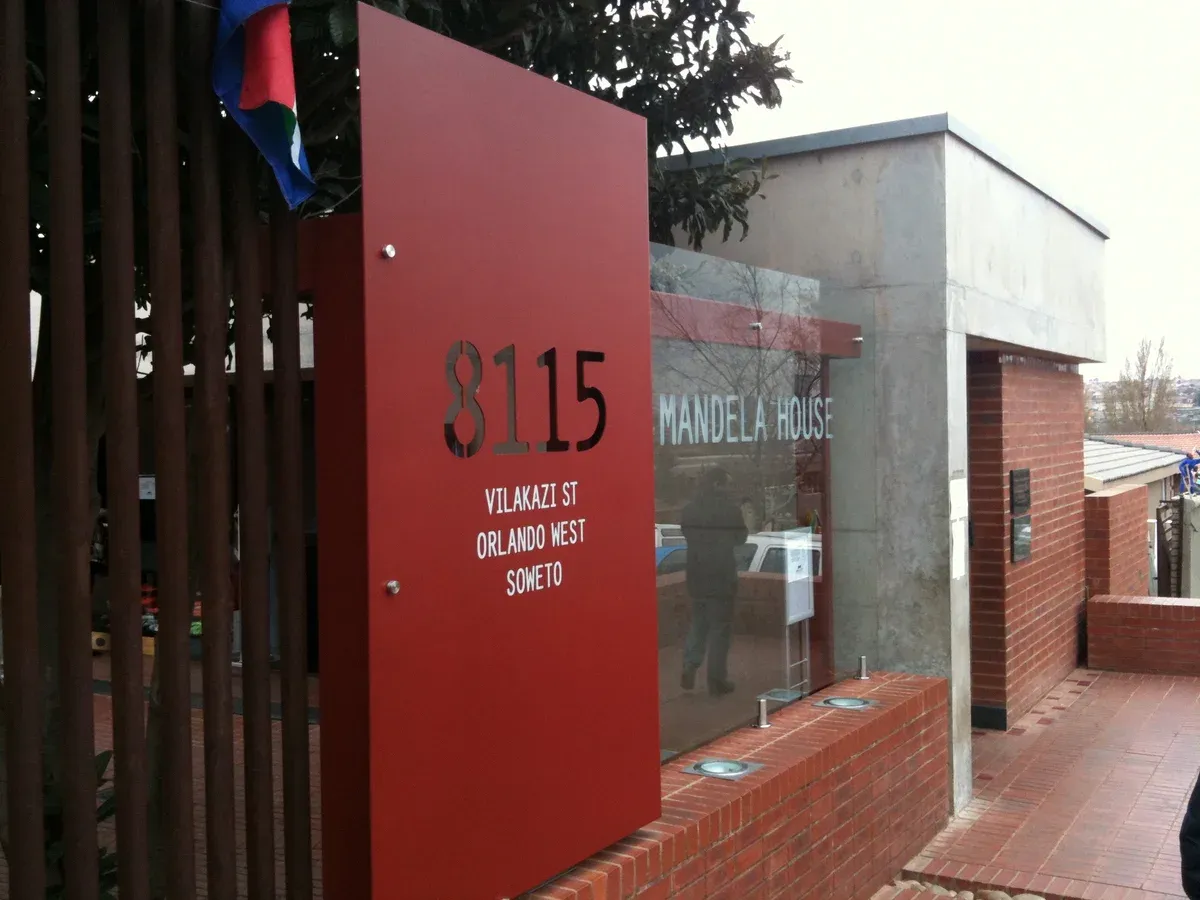
Mandela House at 8115 Vilakazi Street. Photo: Richard Matthews, CC BY 2.0, via Wikimedia Commons
Built in 1945 by the city, not for the Mandelas
The house went up in 1945, commissioned as part of a Johannesburg City tender for new houses in Orlando — it was never designed for the Mandelas, it was the next house on the list. Mandela moved in during 1946 with his first wife, Evelyn Ntoko Mase, when he was a young law clerk with no money and a bed to find. He later described the bedroom as so small that a double bed took up almost the entire floor space.
Practically, that is the scale to expect: the whole visit is one small dwelling and a visitor centre, not a campus.
Home from 1946 to 1962
Mandela lived at 8115 for sixteen years, through his divorce from Evelyn Mase (finalised in 1957), his marriage to Winnie Madikizela-Mandela in 1958, and the Treason Trial years — though by then struggle work left him with little time at home, as the museum's own timeline puts it. He left in 1962, the year he was arrested and began his twenty-seven years in prison. When he came back after his release in 1990, telling the crowd he had come home at last, he moved out again after eleven days: the house he returned to was already a national symbol, not a place a lawyer could live.
The bullet scars, the stones and the 1988 fire
The walls you walk past are original, and they carry the record of the 1970s and 1980s on them — which is why the marks are left as they are.
Read the facade before you queue
The brickwork carries bullet marks from police gunfire and scorch marks from Molotov cocktail attacks — damage from the years when the house sat in streets that were regularly in open conflict, left unrestored on purpose. Look at the front wall while you wait; most visitors only notice it on the way out. Inside, the interpretation keeps to the same restraint: photographs and citations rather than drama.
28 July 1988: the house burnt to the ground
The museum's own history records that the house was burnt to the ground on 28 July 1988, after conflict involving the Mandela United Football Club and pupils of Daliwonga High School, and that the community helped rebuild it. The structure you enter is therefore both original 1945 fabric and community reconstruction — one more reason the restored marks on the surviving walls are treated as evidence rather than damage. It is also the reason the 2008 restoration could promise 'authentic' materials: the house had already been rebuilt once by the people around it.
From family home to museum: 1997–2009
The house has been a public museum for a shorter time than it was a home: the sequence below explains what changed and when, all of it dated by the museum or the heritage record.
The trust, the status, the restoration
Mandela donated the house to the Soweto Heritage Trust on 1 September 1997 to be run as a museum, and it was declared a National Heritage Site on 16 March 1999, with Mandela himself as Founder Trustee. The big intervention came later: restoration work began on 18 July 2008 — his ninetieth birthday — after the trust raised R9 million, the house closed for a year while original fabrics were sourced, and it reopened on 19 March 2009 with a new visitor centre. That is the building you tour today.
What is actually inside
Keep expectations calibrated: this is a small house, and the display inside is photographs, the citations and honorary awards given to Mandela — including a world championship belt presented by boxer Sugar Ray Leonard — and period furnishings. The museum describes its exhibitions as visual storytelling for the Mandela family legacy. Give it 45 to 60 minutes including the visitor centre; you will not need more, which is exactly why it pairs so cleanly with the Hector Pieterson Museum two blocks away.
How much time to give Mandela House
The house itself is fixed in size, so the variable is what you wrap around it. Three routings, from the one-stop morning to the full history day.
Three ways to put it in a day
The decision is transport and appetite, not time inside. If you are driving yourself, go early, park on the Vilakazi Street precinct, and walk between the two museums; if you are not driving, a guided day removes the driving-in-Soweto question entirely — the Soweto guide compares that choice in detail.
| Routing | What you get | What it skips | Door to door |
|---|---|---|---|
| The paired morning | Mandela House, then the Hector Pieterson Memorial and Museum two blocks north, with Vilakazi Street in between | The rest of Soweto — the towers, the markets, Orlando East | About 2½–3 hours including driving to Orlando West |
| The combined guided day | The 7-hour history day: Soweto with entry logistics handled, then the Apartheid Museum and Constitution Hill, hotel pickup included | Slow looking — four major stops in seven hours keeps the pace firm | A full day, hotel door to hotel door |
| The tight stop | The house and visitor centre only, at the $6.44 (R105) / $11.35 (R185) door rate | The second museum, the street's cafés, everything else | 45–60 minutes on site |
Getting to Vilakazi Street
Orlando West sits about 30–40 minutes from Sandton by car in normal traffic — the distances in Johannesburg are big, and Soweto is a defined driving area, not somewhere you improvise on foot.
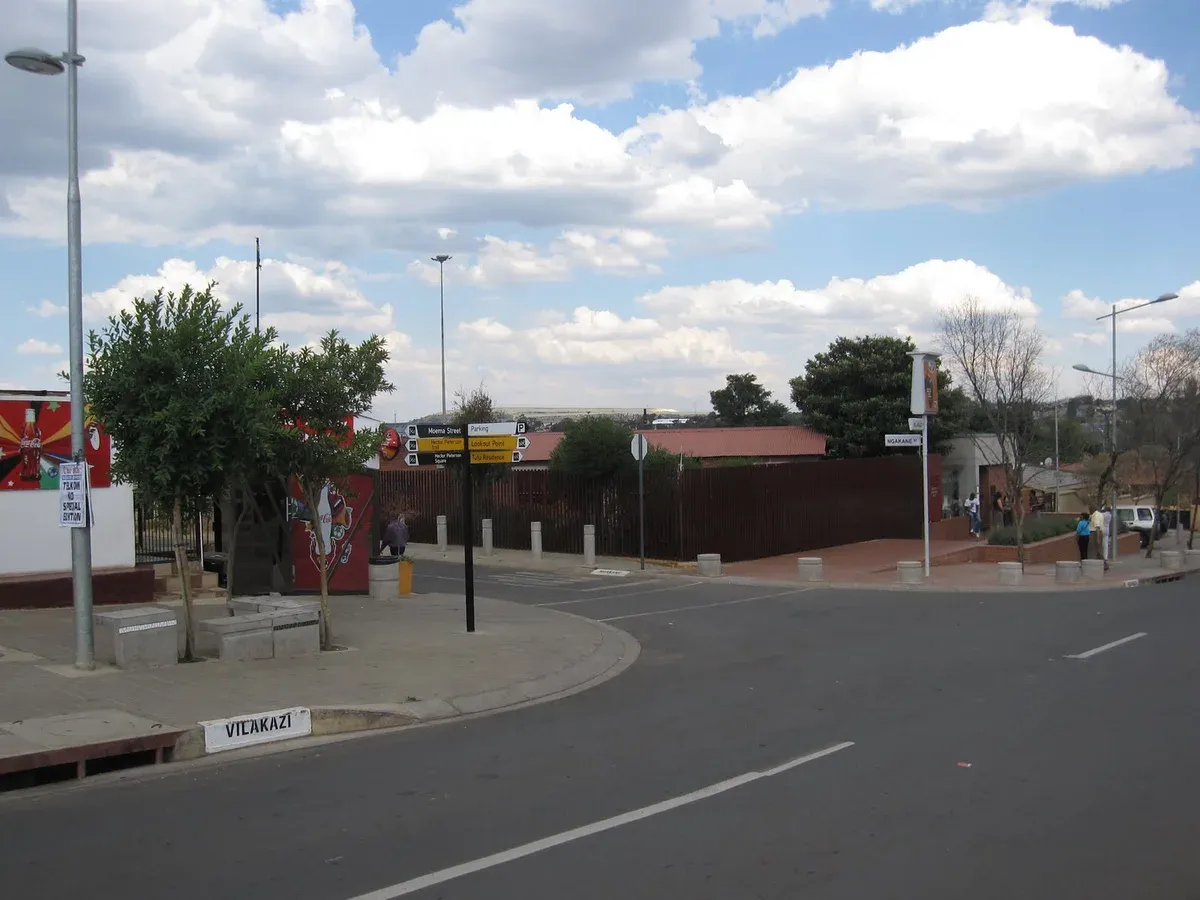
Vilakazi Street, the only tourist-precise walking stretch in Soweto. Photo: Stefan Krasowski, CC BY 2.0, via Wikimedia Commons
By car, by tour, by bus
Driving yourself is straightforward in daylight: Orlando West is signposted off the main Soweto arteries, and the Vilakazi Street precinct is pedestrianised, so you park on the edge and walk the last stretch. Without a car, the choices are a guided day like the combined history tour or the hop-on bus: the City Sightseeing Soweto Extension departs Gold Reef City every hour between 10:30 and 14:30 — re-check the operator's timetable before you commit. Walking is for the defined precinct only; the getting around guide covers why, and the safety page gives the plain-language version.
The cashless machine, and load-shedding
The museum has been cashless since 1 December 2025, so the door transaction is card-only — carry a card that taps, because a cash backup buys you nothing here. When load-shedding rolls, card machines and the traffic lights on the drive in can both go down for a couple of hours; check the day's schedule that morning and keep the plan flexible rather than arriving at a deadline. None of this is a reason to skip the visit — it is the difference between a calm morning and a rushed one.
Mandela House in ten dates
Every date below is argued in the sections above; the list is here so the house reads in order rather than in themes.
-
1945
The city builds a matchbox house
Commissioned as part of a Johannesburg City tender for new houses in Orlando — the Mandelas were not the intended tenants, just the next ones.
-
1946
Nelson Mandela moves in
He arrives with his first wife, Evelyn Ntoko Mase, into a bedroom where a double bed filled almost the whole floor.
-
1958
Winnie Madikizela-Mandela joins
After his divorce was finalised in 1957, Mandela married Winnie in 1958; the house becomes a family home again, then a struggle headquarters in all but name.
-
1962
Mandela leaves for good
The year of his arrest and the start of twenty-seven years of prison; he never lives at 8115 again.
-
1977
Winnie banished to Brandfort
The daughters remain in the house while Winnie is sent to exile in the Free State, per the museum's own timeline.
-
28 July 1988
The house burns down
Fire destroys the house after conflict involving the Mandela United Football Club; the community helps rebuild it.
-
1990
The eleven-day return
Released from prison, Mandela comes back to Vilakazi Street and tells the crowd he has come home at last — then moves out after eleven days.
-
1997–1999
Trust, then National Heritage Site
Donated to the Soweto Heritage Trust on 1 September 1997; declared a National Heritage Site on 16 March 1999 with Mandela as Founder Trustee.
-
18 July 2008
Restoration begins
Work starts on Mandela's ninetieth birthday after the trust raises R9 million; the house closes for a year to source original fabrics and build the visitor centre.
-
19 March 2009
Reopens as the museum you visit
Formal relaunch after the restoration — the current house, tour and visitor centre date from this reopening.
Dates from the museum's own history page (mandelahouse.com/about/) cross-checked against the Wikipedia article; the 1997 donation and the 1990 eleven-day return are recorded in both.
Five things most visitors do not know about Mandela House
The details that change how the visit reads, each one traceable to a source you can check yourself.
The details worth arriving with
None of these are secrets; all of them are missed, because the house is small and the queue moves you along. Read them before you go and the rooms make more sense than any placard.
- The house was city housing before it was the Mandelas' — it went up in 1945 under a Johannesburg City tender, and they simply moved in the next year (mandelahouse.com/about/).
- The bedroom fits inside one sentence: Mandela said a double bed took up almost the entire floor (mandelahouse.com/about/).
- The marks on the front wall are left unrestored on purpose — bullet scars from gunfire and scorch marks from Molotov attacks (Wikipedia, Mandela House).
- The house burnt to the ground on 28 July 1988 and the community rebuilt it; today's structure carries both 1945 fabric and that reconstruction (mandelahouse.com/about/).
- A boxing championship belt from Sugar Ray Leonard hangs among the citations inside — an exhibit most visitors walk past (Wikipedia, Mandela House).
At Mandela House: do this, skip that
Every line compresses a decision argued above into the form you can act on at the door.
Do
- Bring a card that taps — the museum has been cashless since 1 December 2025 and the desk has no cash fallback
- Bring your ID if you are a South African or African Union national; the $6.44 (R105) band is checked against it
- Go late morning on a weekday and do the Hector Pieterson Museum the same morning — they are two blocks apart
- Look at the front wall's bullet and scorch marks before you queue; they are the oldest exhibit on the site
- Pair the visit with the Soweto guide's eating and timing notes if you are staying into the afternoon
Don't
- Don't plan around a published opening time — the museum states none, so build slack rather than a deadline
- Don't arrive on Good Friday, Family Day, Christmas Day, Day of Goodwill or New Year's Day; those are the published closures
- Don't expect a big museum — it is one small house; the 45–60 minute expectation is the honest one
- Don't walk beyond the Vilakazi Street precinct on your own; the safety page explains where the line sits
- Don't rely on cash or assume machines work through load-shedding — check the schedule and carry a tap card
Vilakazi Street map: the house and its two neighbours
The house, the museum two blocks north and the towers to the south — the three Soweto pins that decide most itineraries.
- 1 Mandela House, 8115 Vilakazi StreetThe museum: card-only entry, no published hours, five public-holiday closures a year
- 2 Hector Pieterson Memorial and Museum, Khumalo StreetTwo blocks north — the other half of the paired morning, with its own tariff page
- 3 Orlando TowersThe painted cooling towers south of Orlando West — the view you have seen in every Soweto photo
Numbers match the pins on the map.
Next stop from Mandela House
Walk minutes are our estimates from the GPS distances; everything here sits inside the Orlando West precinct you are already standing in.
Hector Pieterson Memorial and Museum
Two blocks north on Khumalo Street, the city-run museum about 16 June 1976. The published tariff tops out at $1.84 (R30) — and no adult rate is listed at all, which the Hector Pieterson guide prints plainly.
5 min walk Read the guideThe rest of Soweto
Orlando West is one corner of a large township with its own eating, markets and towers. The Soweto guide sequences a half-day and says where a guide earns their fee.
You are in it Read the guideOrlando Towers
The two painted cooling towers and, if they are running, the bungee. The towers guide carries the current status — the operator's own site has been under maintenance, so verify before you build the day around it.
4 min by car (1.7 km); don't walk it solo Read the guideMandela House questions
How much is the entrance fee at Mandela House?
The official table on the museum's own site charges SA and African Union adults $6.44 (R105) and international adults $11.35 (R185); ages 7–18 and students pay $2.76 (R45) / $4.60 (R75), over-60s $3.37 (R55) / $11.35 (R185), and under-7s are free or $0.31 (R5) for international infants. The dual pricing is published policy, not a surcharge invented at the door.
Where is the real Nelson Mandela house?
He had two famous Johannesburg houses: the one you visit is Mandela House at 8115 Vilakazi Street, Orlando West — his home from 1946 to 1962 and now the Nelson Mandela National Museum. The mansion in Houghton Estate, in the city's suburbs, was his private residence as President and after retirement; it is a different property, not open as this museum is, and it is a drive north rather than a stop on the Soweto circuit.
What time does Mandela House open?
The museum publishes no opening hours on its official site — not a range, not a season, nothing — which is why this page will not print a time either. Practically: aim for late morning, after the first tour buses and before the midday bunch, and keep the day flexible rather than fixed.
What days is Mandela House closed?
The published closures are Good Friday, Family Day, Christmas Day, the Day of Goodwill and New Year's Day. Family Day and Good Friday move with Easter each year, so check the Easter dates for your travel window before fixing a Soweto day.
Is it safe to go to Vilakazi Street, Soweto?
Vilakazi Street is a defined, pedestrianised tourist precinct with a permanent presence of guides, vendors and other visitors — it is one of the areas in Johannesburg where walking is normal. The precinct is the point: stay on it, drive or ride between neighbourhoods rather than walking them, and treat the safety basics the same as anywhere in the city. A first visit with a guide — the combined history day, for example — removes the navigation question entirely.
What is the story behind Mandela House?
In short: built by the city in 1945, home to Nelson Mandela from 1946 to 1962, attacked and rebuilt across the 1980s — burnt down on 28 July 1988 and raised again by the community — then donated to the Soweto Heritage Trust in 1997, declared a National Heritage Site in 1999, and reopened as a restored museum after a R9 million restoration. The sections above give each step with its source.
Do you need to book Mandela House tickets in advance?
The museum runs no online booking of its own — you pay at the door by card. The only bookable option is a guided product: the combined history day bundles the entry logistics with transport and the other stops, and it sells through the operator's page with free cancellation up to 24 hours ahead.
How long does a visit to Mandela House take?
The museum states no visit length, and the honest answer is that the house decides: one small dwelling plus the visitor centre is a 45–60 minute visit. Pair it with the Hector Pieterson Memorial and Museum two blocks away and the morning totals about three hours door to door.
Mandela House on film: the house and the street
Three walk-throughs that show the scale of the house and what the Vilakazi Street precinct looks like on a normal day — useful calibration before you build a morning around it.
Inside Nelson Mandela House Museum 8115, Soweto, South Africa – A Walk Through History
A room-by-room walk through the museum itself, which answers the 'is it worth it inside?' question better than any photograph.
Video: Zacc TravelsMandela House & Hector Pieterson Memorial | Soweto, Vilakazi Street
Both halves of the paired morning in one video — the house and the memorial two blocks north, on the streets you would walk.
Video: Tight BoltNelson Mandela House, Vilakazi Street Soweto
The street approach and the facade, filmed by a Soweto creator — the closest preview to arriving on foot.
Video: Vusi MotauVideos load from YouTube only when you press play.
Prices, hours and terms are set by the venue or operator and confirmed at checkout.
We may earn a commission if you book through one of our links, at no extra cost to you. Full affiliate disclosure