 Johannesburg Travel Guide
The Soweto Uprising: What Happened on 16 June 1976
The June 16, 1976 Soweto uprising began as a school protest and ended as the day that changed the way the world saw South Africa. Between 15,000 and 30,000 students marched against being taught in Afrikaans; police opened fire; and a photograph taken that morning by Sam Nzima carried the day into newspapers across the planet. This page sets out, plainly and from the published accounts, why the students marched, what happened through the hours of that morning and afternoon, which figures still disagree with each other, and where a visitor stands on the route today — the Hector Pieterson Memorial on Khumalo Street, now the anchor of any honest visit to Soweto. The Johannesburg travel guide homepage carries the rest of the plan.
Quick answer What happened, who died, what the day is called now
On the morning of 16 June 1976, between 15,000 and 30,000 black schoolchildren marched through Soweto against a decree forcing Afrikaans-medium instruction in their schools. The police met the march with tear gas and then live ammunition. Hector Pieterson, twelve years old, was among the first killed, and Sam Nzima's photograph of the dying boy being carried away went worldwide. 16 June is now a public holiday in South Africa, Youth Day, and the memorial on the march route is the museum that carries Hector's name.
Key takeaways
- The day's usually given toll — 176 dead in Soweto by nightfall — is contested: the police counted 23, and the later Cillié Commission reached 575 deaths from the countrywide violence (the figures are set out in the table below)
- The photograph's three figures were Hector Pieterson, the pupil Mbuyisa Makhubo carrying him, and Hector's sister Antoinette Sithole running alongside — the story of the picture is below
- A visitor meets this history on the ground: the memorial on Khumalo Street anchors the Soweto guide, and a guided walk with a resident is the form most first visits take
- The political consequences ran through everything that followed, from the court built on the old prison to the houses on Vilakazi Street
Why the students marched
- The Afrikaans Medium Decree of 1974 — maths and social studies to be taught in Afrikaans
- Afrikaans was the language of the state that enforced pass laws and forced removals
- The 13 June meeting formed the Action Committee that planned a disciplined, unarmed march
The trigger was a language. In 1974 the Department of Bantu Education issued the Afrikaans Medium Decree, which forced black schools to teach in Afrikaans and English in equal measure — in practice, maths and social studies were to move to Afrikaans from the 1975 school year. The decree landed on schools whose pupils mostly spoke Zulu, Sotho, Xhosa or Tswana at home, and whose teachers had often never studied their own subjects in Afrikaans. Learning a subject through a language neither the pupil nor the teacher commanded made the subject itself harder to learn, which was the point the students and their teachers kept making.
Afrikaans carried a second weight beyond the classroom. It was the language of the apartheid state — of the police, the pass offices, the administration — and Desmond Tutu gave the feeling its lasting phrase: "the language of the oppressor". Even the deputy minister responsible, Punt Janson, said publicly that he had not consulted black parents and did not intend to.
The anger organised itself through the schools. Children at Orlando West Junior School went on strike at the end of April 1976, the strike spread school by school, and on 13 June students from across Soweto — among them Teboho "Tsietsi" Mashinini of Morris Isaacson High School — formed an Action Committee, later the Soweto Students' Representative Council. It called a peaceful demonstration for Tuesday 16 June: columns from schools across the township converging on Orlando Stadium, a route deliberately passing Orlando West in solidarity with the strikers, and a memorandum of grievances to be handed to the Department of Bantu Education.
The day itself, as the accounts give it
No single log of the day exists; what follows is the sequence the main accounts agree on, at the clock times they state.
-
From about 08:00
The columns set out from the schools
Tsietsi Mashinini leads pupils out of Morris Isaacson High; a second column walks in from Naledi High at the far south-west. Many join on the way — some pupils learn of the march only that morning.
-
Mid-morning
Police barricade the planned route
The Action Committee's leaders tell the crowd not to provoke the police; the march turns and makes its way towards Orlando West, singing, carrying placards — "Down with Afrikaans" among them.
-
Late morning
The confrontation at Orlando West
Near Orlando West Junior school, on the stretch by Vilakazi Street, police cordon the march, fire tear gas, and then live ammunition is fired into the crowd. Among the first killed are 15-year-old Hastings Ndlovu and 12-year-old Hector Pieterson. The photographer Sam Nzima makes the frame that carries the day to the world.
-
Through the afternoon
The day spreads
Government outposts and bottle stores — buildings of the state and its beer monopoly — are set alight. Dr Melville Edelstein, a welfare officer who had spent his career working for Soweto's poor, is killed by the crowd.
-
By nightfall
The count begins, and the cover-up with it
The police count 23 dead that day; the figure usually given since is 176 killed in Soweto by the end of 16 June. Hospitals, ordered by police to report everyone treated for bullet wounds, are refused by their own doctors — who record gunshot wounds as abscesses to protect their patients.
-
17 June onwards
The aftermath, in the city and the country
1,500 armed police deploy into Soweto. About 400 white students from the University of the Witwatersrand march through central Johannesburg in protest the next day. Unrest spreads to townships across South Africa and does not fully abate for months.
Sequence and clock points follow the accounts published at sahistory.org.za, britannica.com and en.wikipedia.org (the research bundle behind this page). The crowd size is the point the accounts disagree on most: South African History Online's own account gives between 3,000 and 10,000 students mobilised, Britannica puts roughly 10,000 in the streets by the time the front of the march reached Vilakazi Street, and the higher ranges of 15,000 to 30,000 circulate for the day as a whole. SAHO warns plainly that some accounts of the day directly contradict each other.
The photograph that carried the day to the world
Sam Nzima made his frames as the shooting started at Orlando West: a sequence of a dying twelve-year-old being carried towards help, the pupil Mbuyisa Makhubo holding Hector Pieterson in his arms, and running alongside them Hector's sister Antoinette Sithole, seventeen, who had been in the march. The frame that survived became the most reproduced image of apartheid's violence.
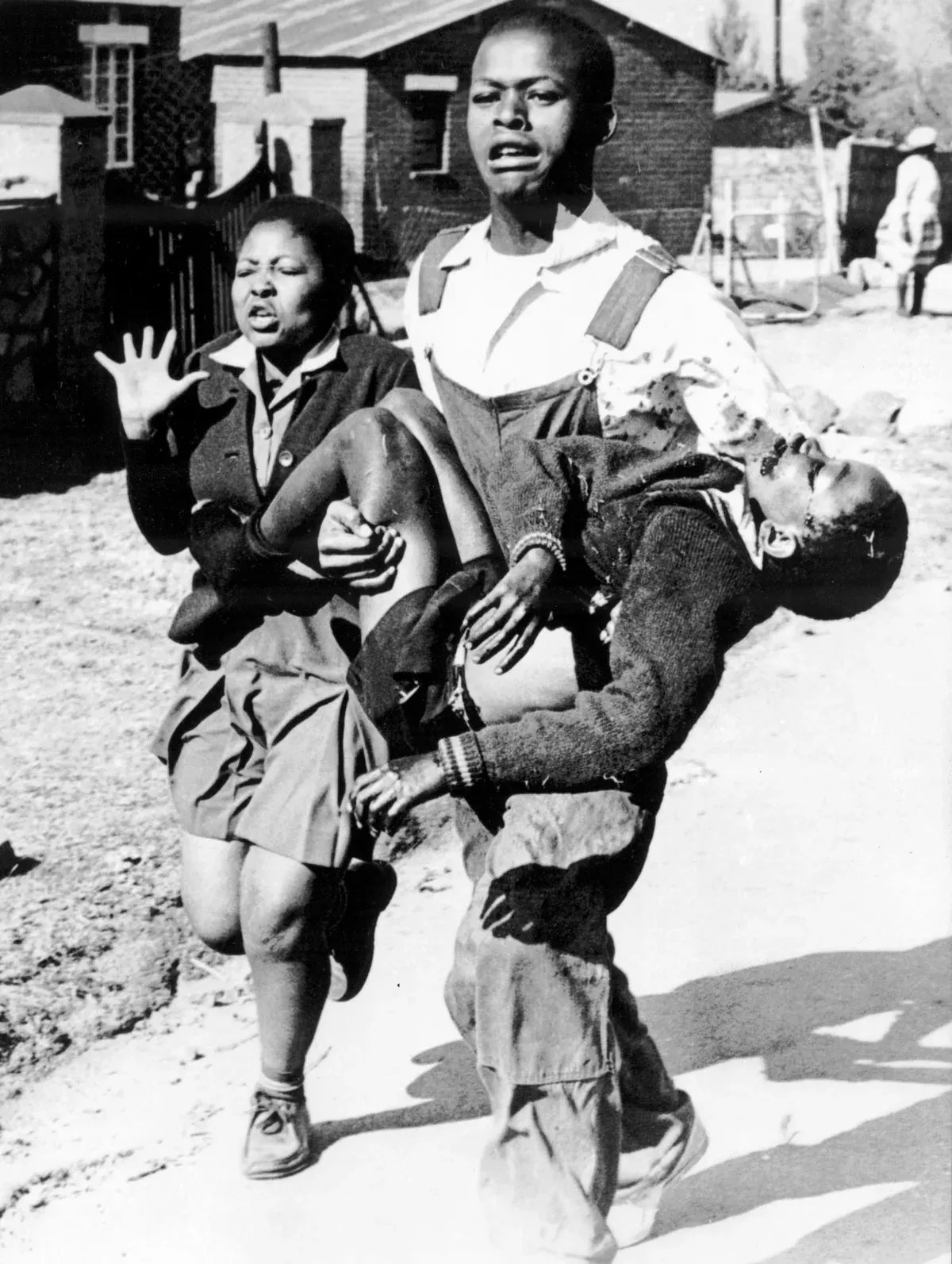
Mbuyisa Makhubo carries Hector Pieterson; Antoinette Sithole runs beside. 16 June 1976. Photo: Sam Nzima, Public domain, via Wikimedia Commons
Its consequences were political, immediate and one-sided. The picture ran in newspapers around the world and put children's faces on what had been reported as a country's internal disorder; the UN Security Council condemned the shootings within days, in Resolution 392. For the apartheid government the photograph was evidence of a different kind — the kind that could not be reprinted away.
The two pupils in the frame paid differently, and one part of the story has to be left honestly open: Antoinette Sithole survived the day, testified about it for decades afterwards and for years gave tours at the museum that now stands near where her brother was shot. What became of Mbuyisa Makhubo after the photograph is not settled in any account this page could read, so it is not retold here. The photograph is why the day was never a local news item: it is the reason a visitor from any country arrives in Soweto already knowing one image from it.
The aftermath, and the figures that still disagree
The uprising did not end on the 16th. Soweto burned through the following days; the unrest spread to other townships and flared for months. Young people left the country in their thousands to join the movements in exile, and the exodus that began in June 1976 shaped the armed struggle for the next fifteen years.
In one sense the day did what the government's opponents had failed for a decade to do: it broke the assumption, inside and outside South Africa, that apartheid was stable.
How many died is still an argument about sources, and the honest number depends on who was counting and when. The table sets out the published figures side by side.
| What is counted | The figure | Who published it |
|---|---|---|
| Dead in Soweto, 16 June — police count | 23 | The police's own casualty figure for the day |
| Dead in Soweto, 16 June — the usually given figure | 176 | South African History Online's account of the day, since widely adopted |
| Deaths from the countrywide violence to February 1977 | 575, with 3,907 wounded | The Cillié Commission, the judicial inquiry; generally agreed to be an undercount |
| Condemnation | UN Security Council Resolution 392 | The Security Council, within days of the shootings |
Two smaller facts belong on this page because they are the ones visitors ask about most. The doctors' false ledger is the reason no exact casualty list for 16 June exists: medical records were falsified deliberately, to protect patients from prosecution, so the 176 rests on the best subsequent accounting rather than on a register. And no police officer was ever convicted for the shootings of that day — the Cillié Commission blamed the violence on neither side, and the prosecutions never followed.
The day South Africa took back: Youth Day
Since 1994 the country has marked 16 June as Youth Day, a public holiday that puts the schoolchildren of 1976 at the centre of the national story — the date belongs to the students, not to the state that shot them. The name is the statement: it commemorates what young people did, and what was done to them. Schools, choirs and political leaders spend the day at memorials; Soweto's are the most attended in the country.
Beyond South Africa the date carries a second name. The Organisation of African Unity designated 16 June the Day of the African Child in 1991, in memory of the march and of Hector Pieterson specifically — a domestic anniversary became a continent's.
For a visitor, Youth Day changes the practical picture in one way worth knowing: entry to Constitution Hill is free for everyone on 16 June, as on five other public holidays, and the hill's museum and court draw the biggest crowds of the year that morning. At the Soweto memorial the day is a public ceremony, not an ordinary museum morning — moving and crowded.
Where the route stands now: the memorial and the corner
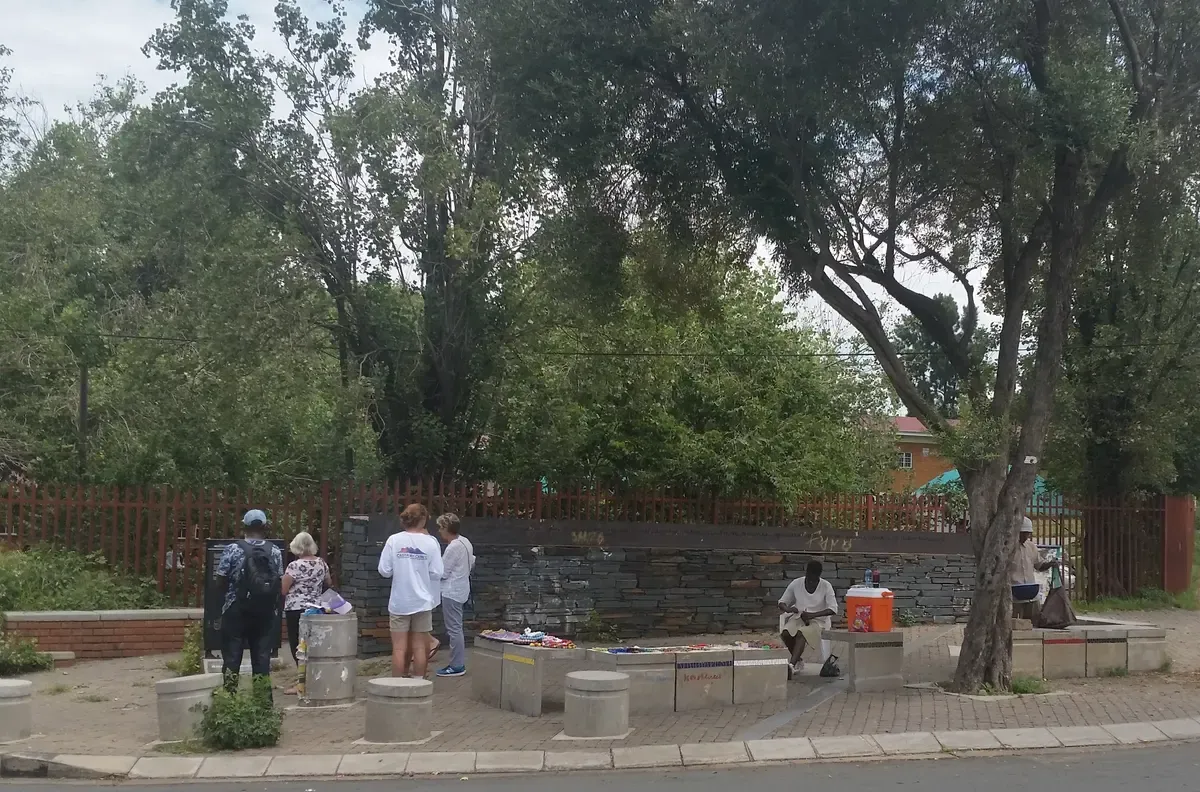
The memorial stone at the corner of Vilakazi and Moema Streets, the site where Hector Pieterson was shot. Photo: Andrew Hall, CC BY-SA 4.0, via Wikimedia Commons
The march route ran through Orlando West, past Vilakazi Street, and the memorial to the day stands on it: the Hector Pieterson Memorial and Museum at 8287 Khumalo Street, opened in 2002 near the corner where Hector was shot. A stone memorial marks the spot itself, a few minutes' walk from Mandela House on Vilakazi Street, and the two together are the reason the streets around them are the most visited ground in Soweto. The museum's exhibition works through the day through testimony and photographs, and the exhibition is built around the photograph above — the story this page tells is the one the walls tell.
It is a small museum and it needs little scheduling: most visits run forty-five minutes to an hour. The City of Johannesburg's tariff page lists fees of $1.84 (R30) for the elderly, $0.61 (R10) for teenagers and students and $0.31 (R5) for children, at $1 = R16.30 — and no adult rate appears anywhere on the official listing, which is worth knowing before you budget. Hours are not published either; keep the visit in daylight, which is how the area is best walked in any case.
How you get the story matters more here than at most museums. The exhibition tells the day plainly, but the streets around it — the route, the corner, the school gates — need someone to point them out, which is why most first visits take a guided walk with a Soweto resident rather than arriving cold. at the last check
Seeing the ground for yourself
This page is history, not a booking pitch — the guide it links is free to read. But the way most visitors first stand on this ground is on a guided Soweto walk, and these three cards are the ones that give the day the context it deserves, listed at the platforms' own prices.
 from $43
Soweto: Walking Tour with a Local Guide and Lunch
Walk Soweto's streets with a local resident, eat where the neighbourhood eats; the most honest two hours you can buy there.
Check Availability from $120
Johannesburg: Half-Day Soweto Tour with a Local Guide
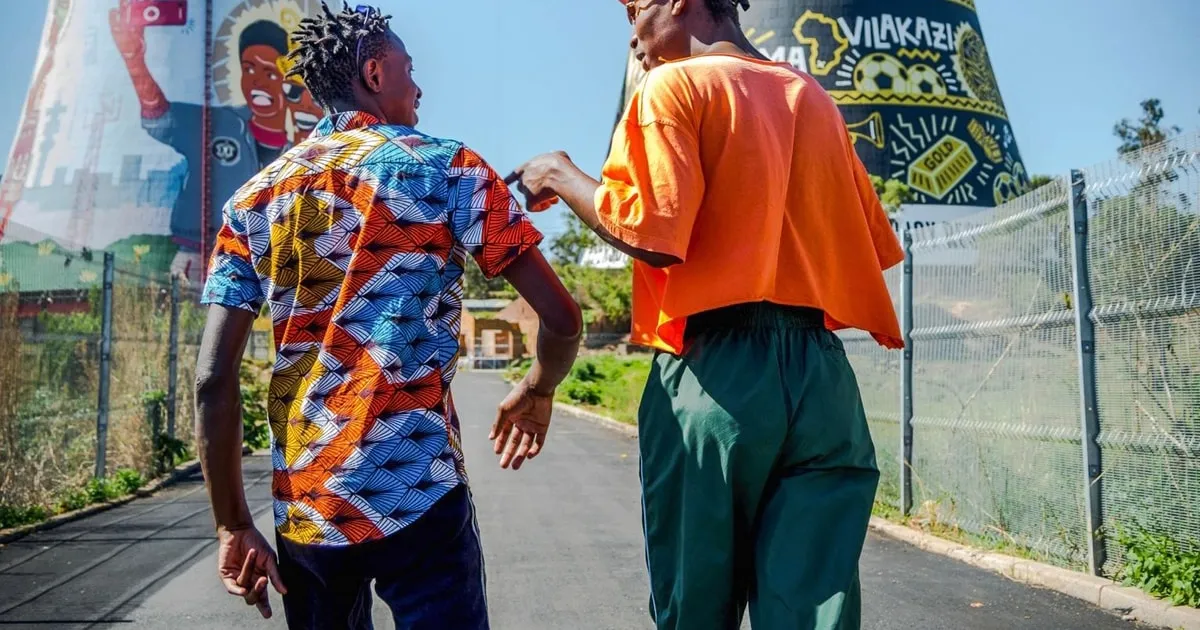
Half day with a guide who lives there: Vilakazi Street, the Hector Pieterson Memorial and the Orlando Towers up close.
Check Availability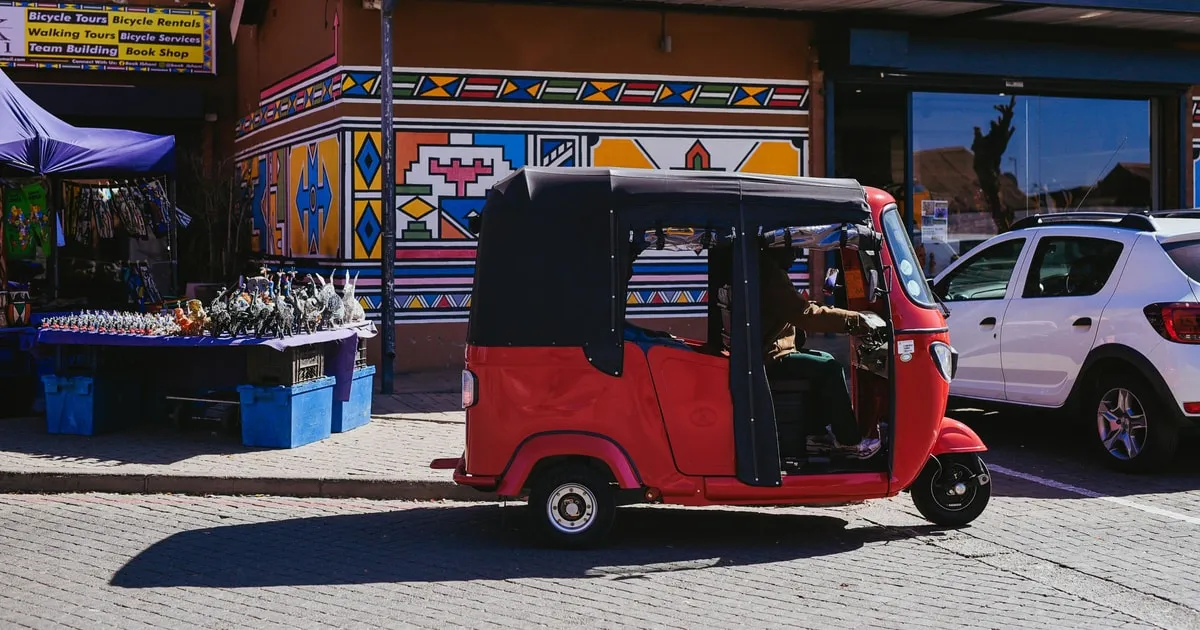 from $58
Johannesburg: Soweto Tour by Tuk Tuk
The tuk-tuk version: three wheels, open sides, the same Vilakazi Street story with the wind in it.
Check AvailabilityPrices, ratings and details are the platform's own. dollar figures are the listed prices — the platform bills in your account's currency.
Questions people ask about 16 June 1976
What was the reason for the Soweto uprising in 1976?
The Afrikaans Medium Decree of 1974, which forced black schools to teach subjects such as mathematics and social studies in Afrikaans. Students, teachers and parents opposed it because neither pupils nor teachers commanded the language well enough to learn or teach through it, and because Afrikaans was the language of the apartheid state itself. The 16 June march was organised by a student Action Committee to protest the decree peacefully.
Who was the boy killed in the Soweto uprising?
Hector Pieterson, a twelve-year-old pupil (some accounts give thirteen) who was among the first students shot at Orlando West on 16 June 1976, alongside fifteen-year-old Hastings Ndlovu. Sam Nzima's photograph of Hector being carried by Mbuyisa Makhubo, with his sister Antoinette Sithole running beside, became the image of the day. The memorial museum on Khumalo Street carries his name.
How many students died on June 16, 1976?
No exact list exists — doctors falsified hospital records to protect the wounded from prosecution. The police counted 23 dead on the day itself; the figure usually given since is 176 killed in Soweto by the end of 16 June; and the Cillié Commission later counted 575 deaths from the countrywide violence up to February 1977, a total generally agreed to be low.
What is June 16th called now?
In South Africa the date is Youth Day, a public holiday commemorating the students of 1976. Internationally, the Organisation of African Unity designated June 16th the Day of the African Child in 1991. Both names point at the same fact: the day belongs to schoolchildren.
Where did the uprising start, and what stands there now?
The columns formed at schools across Soweto — Morris Isaacson and Naledi among them — and the shooting started in Orlando West, on the stretch by Vilakazi Street. The Hector Pieterson Memorial and Museum now stands on the march route on Khumalo Street, a stone marks the shooting site itself, and the Soweto guide walks the ground stop by stop.
How long did the uprising last?
The march lasted one morning; the uprising did not. Violence in Soweto ran hardest through the days after 16 June and the unrest spread to townships across South Africa, flaring for months — the Cillié Commission was still counting deaths from it into February 1977. The political aftermath ran for the better part of two decades.